
We visited the fifty-four acres of Uppark House on a damp day in September and having waited for the rain to stop we were taken on a tour by one of the long-time volunteer gardeners, David Edyvean. He explained that there was just one paid full-time gardener and one part-time, the work mostly completed by volunteers. Before the Covid pandemic there were between thirty and thirty-five volunteers and now there are only twelve.
From the terrace outside the coffee shop on a clear day it is possible to see the Spinnaker Tower in Portsmouth and as far as the Isle of Wight. At one time the coffee shop was the kitchen and as it was so far away from the house, tunnels were built to take food to the main building and to keep the servants hidden away. I do wonder how warm the food was when it finally arrived at the table.
Following the fire in August 1989, the garden was changed and large ornamental beds were dug and planted to provide interest for the public during the rebuilding. These beds have now been removed as they are not in keeping with the original garden. The latest project is to restore the historic pathway that once led the visitor on a journey around the gardens, with viewpoints along the way. The project will be financed by fundraising events and you can read more about the restoration here: https://www.nationaltrust.org.uk/uppark-house-and-garden/features/restoring-upparks-historic-path-network
In the woodland there are many snowdrops, fritillaria, wild violets and narcissi bulbs, which in spring put on a great show. We were shown some of the Norway maples and a Judas tree Cersis siliquastrum, said to be the variety of tree from which, having betrayed Jesus, Judas Iscariot hung himself. One of the other trees pointed out to us was Clerodendrum, which smells of peanuts.
David Bridges, a National Trust volunteer and SGT member, led the second tour and we saw some of the work that Humphry Repton undertook, following an invitation, in August 1810, by the owner Sir Harry Fetherstonhaugh.
Repton proposed many changes to both the house and the garden and we saw the evidence in the Game Larder which clearly showed the galleted flintwork and was designed to be approached along a cobblestone path with a pattern formed from knuckle bones. Another Repton feature was The Urn on the Mount which can be seen as you walk down the entrance path.
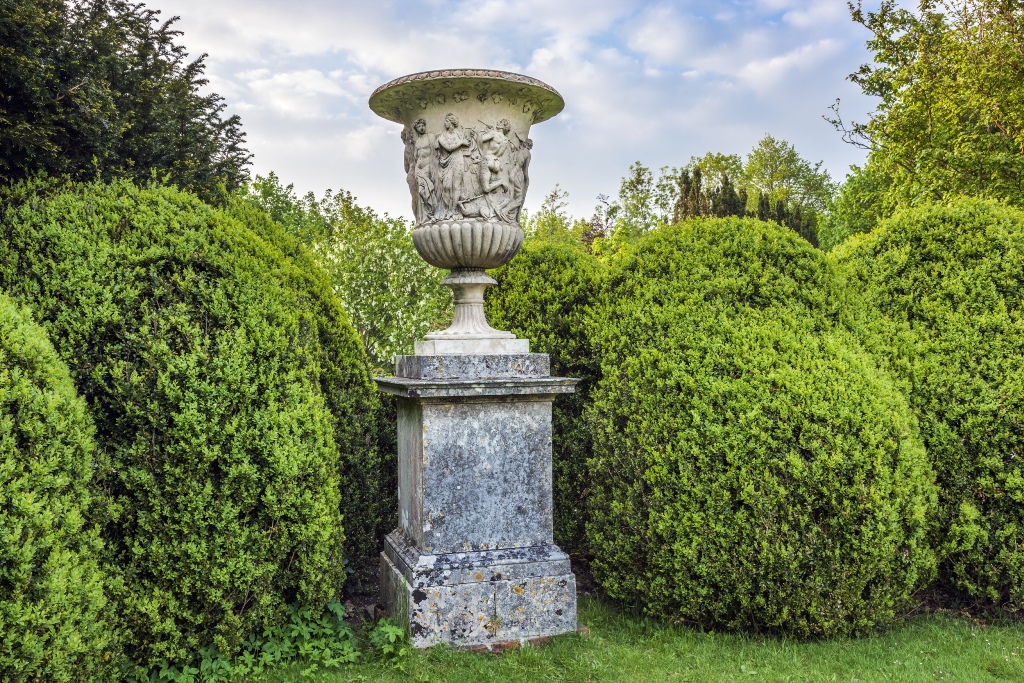
© National Trust Images/Andrew Butler
David told us a delightful story about Sir Harry who on hearing someone singing asked who had the lovely voice. On being introduced to a twenty year-old dairymaid, Mary Ann Bullock, he fell in love and asked her to marry him. He gave her time to think about his proposal and suggested that if his joint of meat that night was served with a slice cut from it he would know that the answer was yes. A slice had been cut. Sir Harry then sent her to finishing school so that she could learn how to behave as lady of the house. It was an unlikely combination as he was in his early seventies, but their union was a happy one and lasted twenty-one years till his death in 1846, after which Mary inherited Uppark.
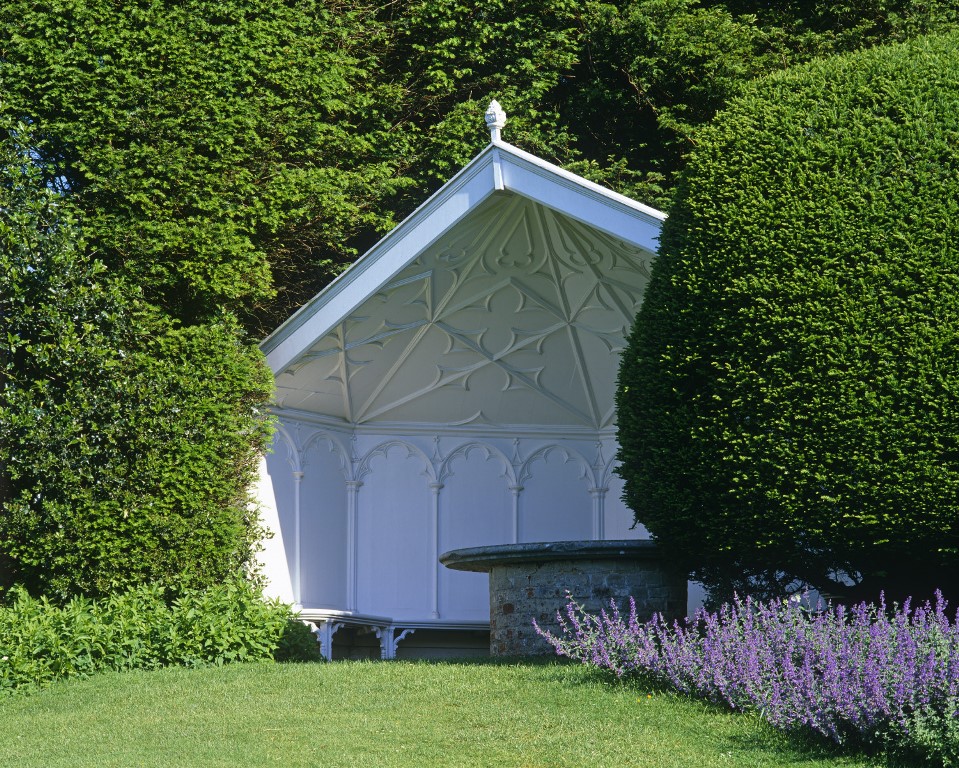
©National Trust Images/David Sellman
We finished our interesting visit with lunch in the restaurant. As we had been invited on a day when Uppark is normally closed to visitors, the house was not open, so another visit is definitely recommended.
Report by Barbara and Ian Voller.
Sennicotts
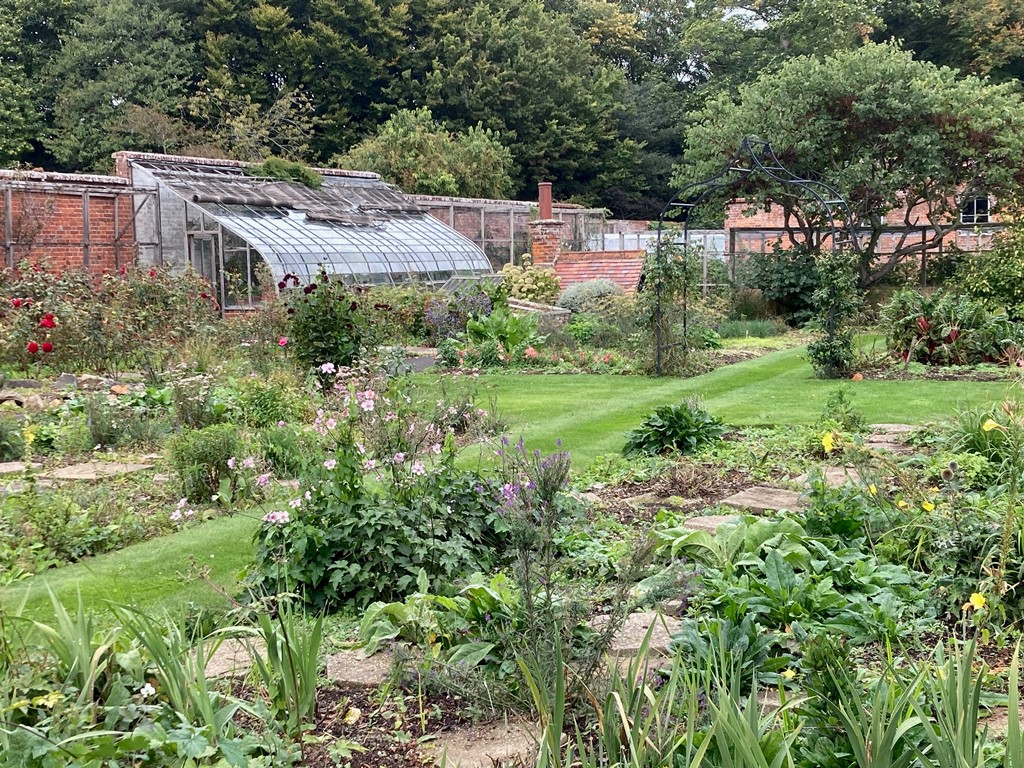
The earlier rain clouds had disappeared as we drove the short distance south from Uppark and through the small villages to the white gates to Sennicotts. We were welcomed by the owner, Eloise Rank, at the delightful summer house on the lawns and began with a lively introduction to the history of the house and garden. Eloise and her husband James inherited Sennicotts about twenty years ago, from his great-uncle, John Rank, and although at first they felt overwhelmed by what had to be done in the garden they set to, with a philosophy of ‘just go for it’. The house is Regency, dating from around 1810 with several notable owners, including the Prince and Princess Louis of Battenburg, who made it their first home after their marriage in 1884. It was then purchased by Geoffrey Bowes-Lyon and his wife who were keen gardeners. Eloise explained that the pair of lions on plinths on the lawn are their namesakes. Mrs Rowland Rank came to live in Sennicotts in 1960 and her younger son, John, lived there for over sixty years.
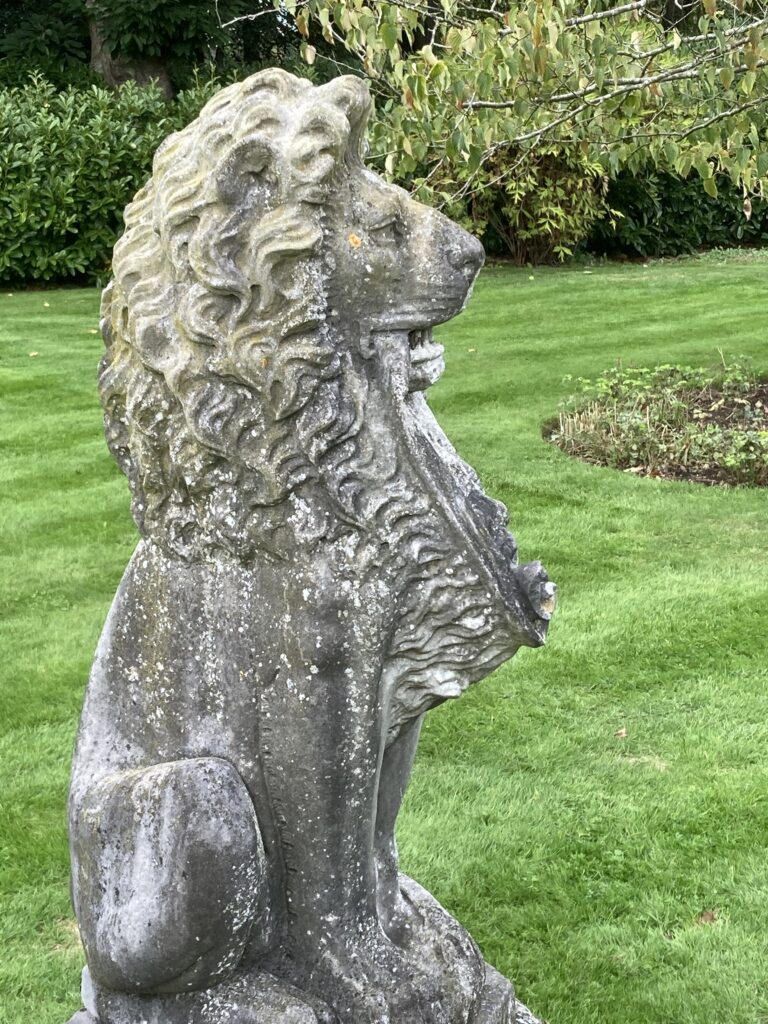
Photo by Sally Ingram.
Many of the trees that we saw in the garden are original, including an impressive Wellingtonia and a sweet chestnut, called the Old Lady. At one time there was a laurel hedge in front of the house but this had become like a forest and was taken out. The original walled kitchen garden however, has been lovingly cared for and on the afternoon of our visit was full of the mellow colours and scents of autumn. There were laden apple trees, ripening fruits on the medlar, and figs growing against the old brick walls. A sweetly scented Styphnolobium japonicum, orJapanese pagoda tree, caught our attention with its attractive white blossom, and the last of the dahlia and roses added a splash of bright colour. Early maps show three greenhouses in the kitchen garden, but these have been lost over time and replaced. A small building with a fireplace and a chimney remains and this was once used to provide heat for growing pineapples.
The garden is surrounded by parkland with many attractive trees, and near the northern boundary was once an avenue of beech trees planted to mark the coronation of Queen Victoria. These were lost in the great storm of 1987 and a new avenue of limes was planted.
After our leisurely stroll in the garden, we returned to the summer house where Eloise was ready with tea and delicious home-made cakes and we could relax and chat in the peaceful surroundings. We thanked Eloise for inviting us to her garden, and agreed that this had been a perfect end to SGT’s garden visits for the year.
Report by Sally Ingram