
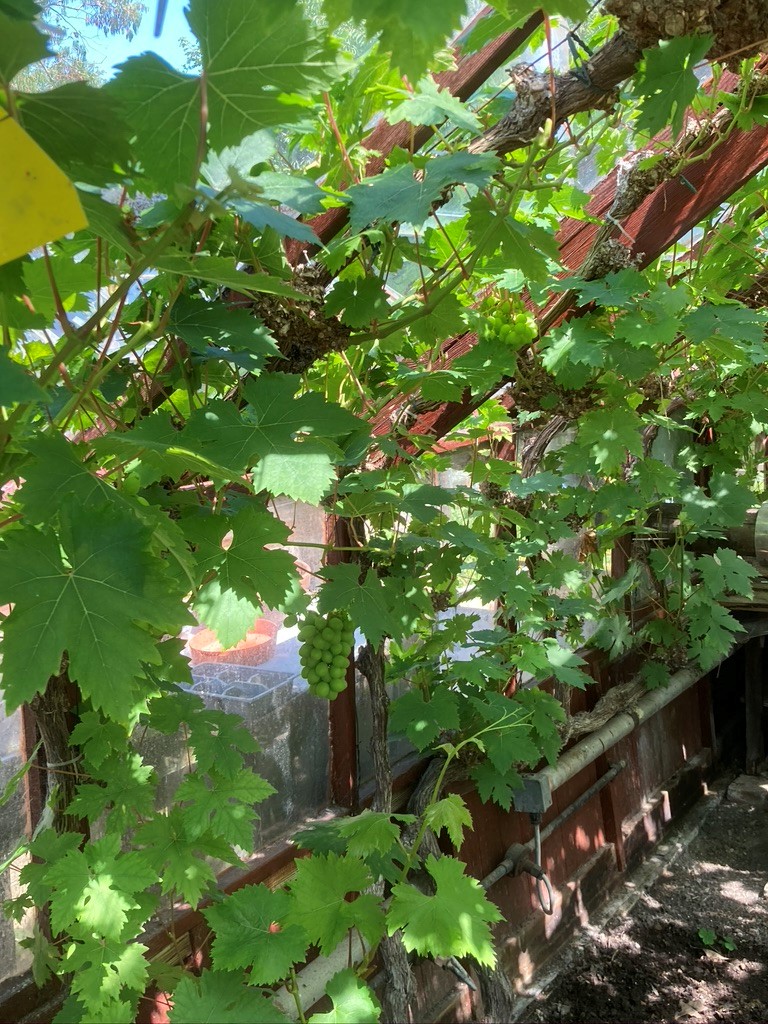
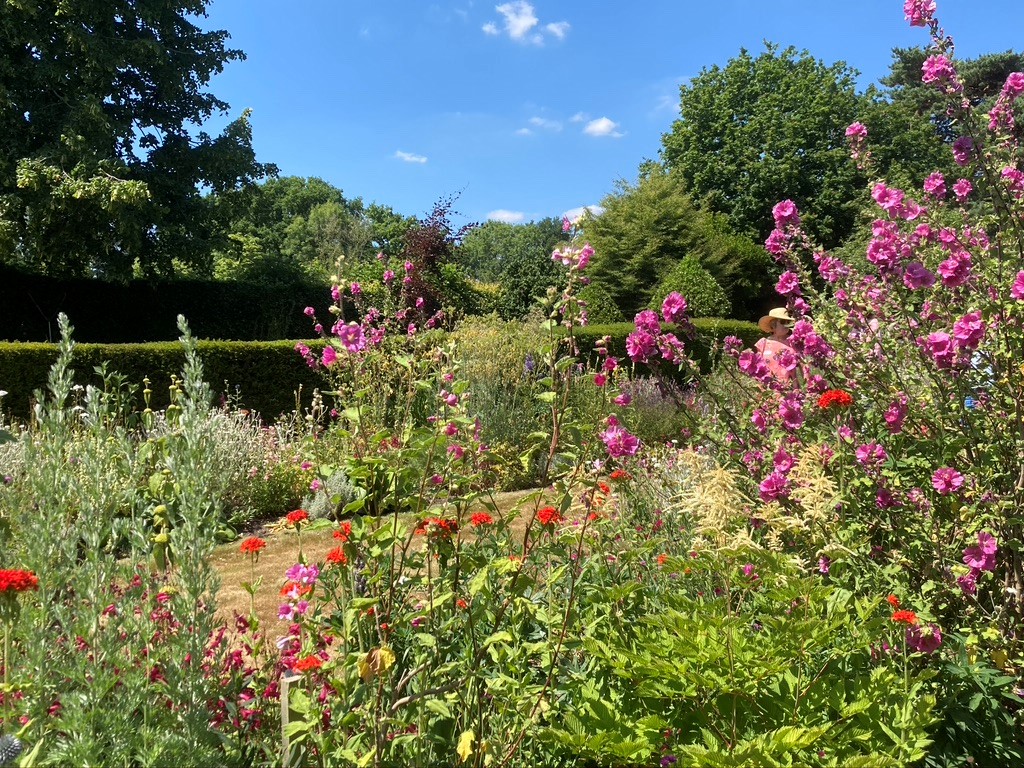
When Drs Ingrid and Hans Sethi started their garden at Luctons thirty-eight years ago they took inspiration from Gertrude Jekyll and the practice of ‘beg, borrow and steal’ to fill the garden with plants. It is a garden for all seasons: in winter there is the aroma of Daphne, in early spring the orchard is filled with fritillaries and then over 6,000 orchids appear, from a mere six planted by Hans all those years ago. The highlight of mid-summer are the long herbaceous borders filled with perennials in a bright profusion of colours and textures: salvias, lychnis, achillea, and mallow keep company and seed themselves freely. These double borders are unusual in not being against a wall, but planted so that the visitor can walk around and see the plants from all perspectives. On our delightful tour Hans showed us the orchard with old apple trees, underplanted with spring bulbs, the meadow of wild flowers, vegetable and herb gardens, and three greenhouses. Hans works in the garden every day and one of his daily tasks is pruning the grape vine.
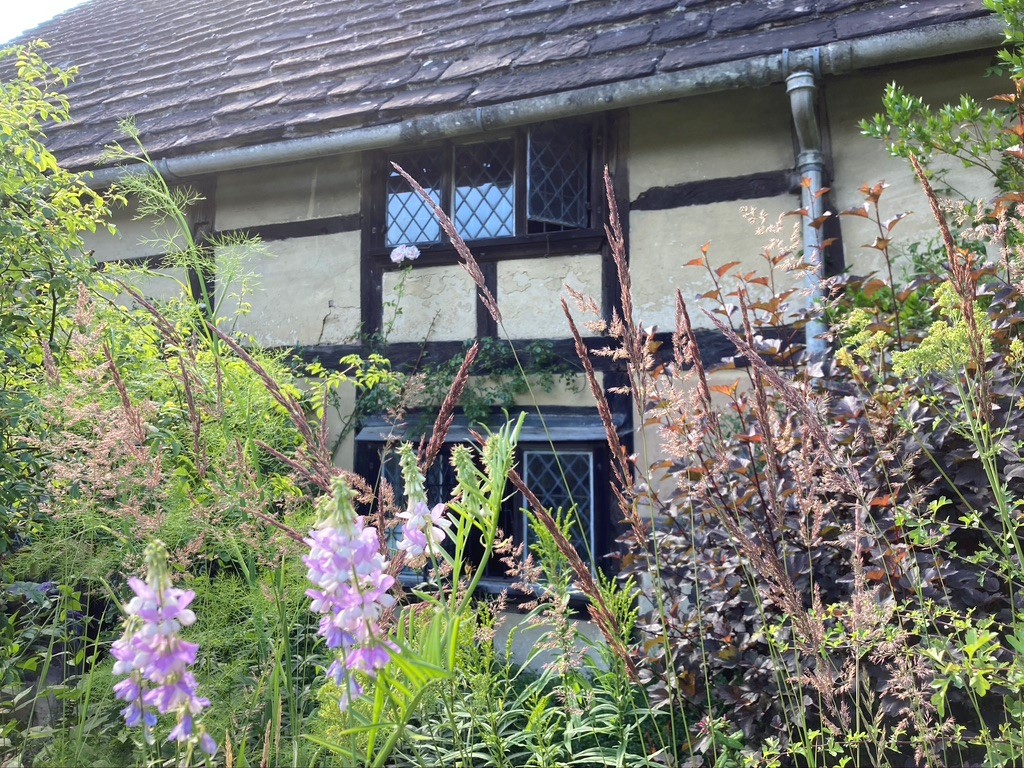
Just across the road from Luctons and behind a clipped yew hedge with topiary peacocks is The Priest House, built for Lewes Priory in 1340 and once the home of Thomas Cromwell, then owned by Elizabeth I, before it became a family home. In 1908 John Godwin King restored the house and opened it to the public. The curator, Antony Smith, who lives in one third of the building, explained that the house was meant to grow out of the garden, which is planted with the herbs of medieval times, for medicine and for magic. Antony gave us a fascinating talk on how many of these plants were once believed to have special powers, for curing ailments and disease and for creating spells. Fern seed, for example, collected on St John’s Eve will make you invisible, because no-one has ever seen fern seeds, and so keeping some in your pocket will grant you this sense of mystery. A good thrashing with stinging nettles will help to cure arthritic joints, and meadow sweet can reduce fever. While there is little evidence of the benefits of some of these treatments, scientific research continues to develop around medicinal folk lore: lawn daisy, once thought to restrict growth, is now investigated as a possible treatment for restricting cancer cells. The garden contains over 170 medicinal plants and although we may no longer need spells and sorcery it is both rich in history and a delight for the senses.
Report and images by Sally Ingram.