We visited this beautiful woodland garden of about twenty-five acres in August 2022, in the middle of a heatwave. It was a Wednesday afternoon, when High Beeches is closed to the public, and so we had the garden just for ourselves.
When we first arrived Sarah Bray gave us a brief introductory talk, explaining how her parents maintained the garden after their acquisition from the Loder family.
Sir Robert Loder purchased High Beeches in 1846, at a time when plant hunting expeditions around the world were bringing back new specimens, many of which Sir Robert purchased and some still survive today. His son, Wilfred, started to plant the woodland and Wilfred’s son, Giles, went on to create the garden we see today.
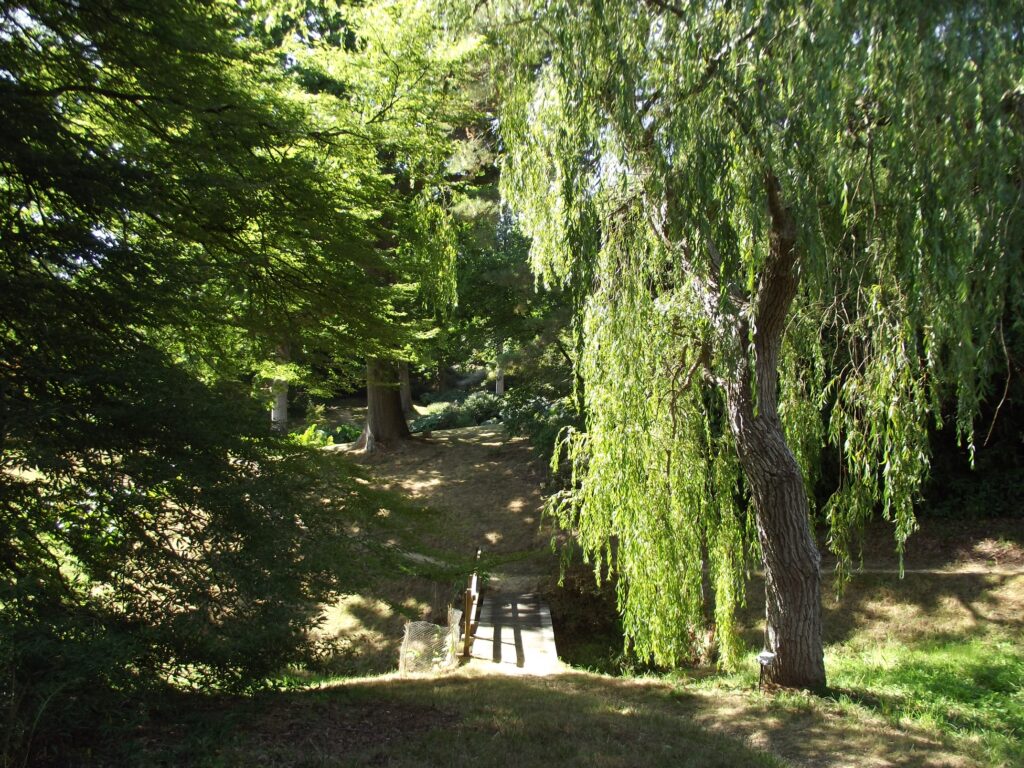
The terrain is uneven and steep in places with the garden routes defined with gravel paths. There were plenty of seats around the garden, some in the shade, which we were happy to take advantage of, especially as the temperature that day was in the high 30s.
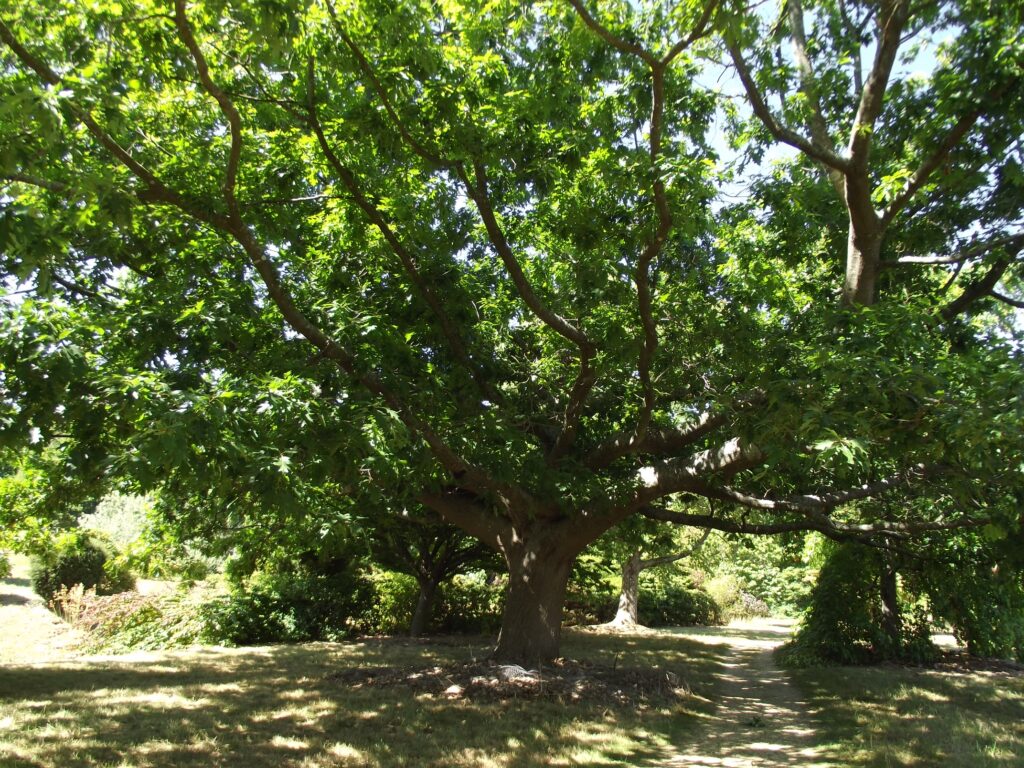
Russell Yates, who has been the head gardener for twelve years, took us on a very interesting tour and explained the naturalistic style of the original planting scheme where they concentrated on species or wild forms of plants. The current-day owners are continuing to plant in the same open way. English Heritage have described the garden as ‘Outstanding Historically’ and have also listed it as Grade II*: ‘an outstanding example of an early 20th century woodland garden’. In places it is possible to see that the oaks had originally been planted in rows, I understand for ships’ timber.
There are many rare, historic and beautiful plants that thrive, too numerous to mention, with more than 200 species of wildflowers. The wildflower meadows are cut back at different times of the year to encourage the seeding of a changing swathe of colour for pollinators.
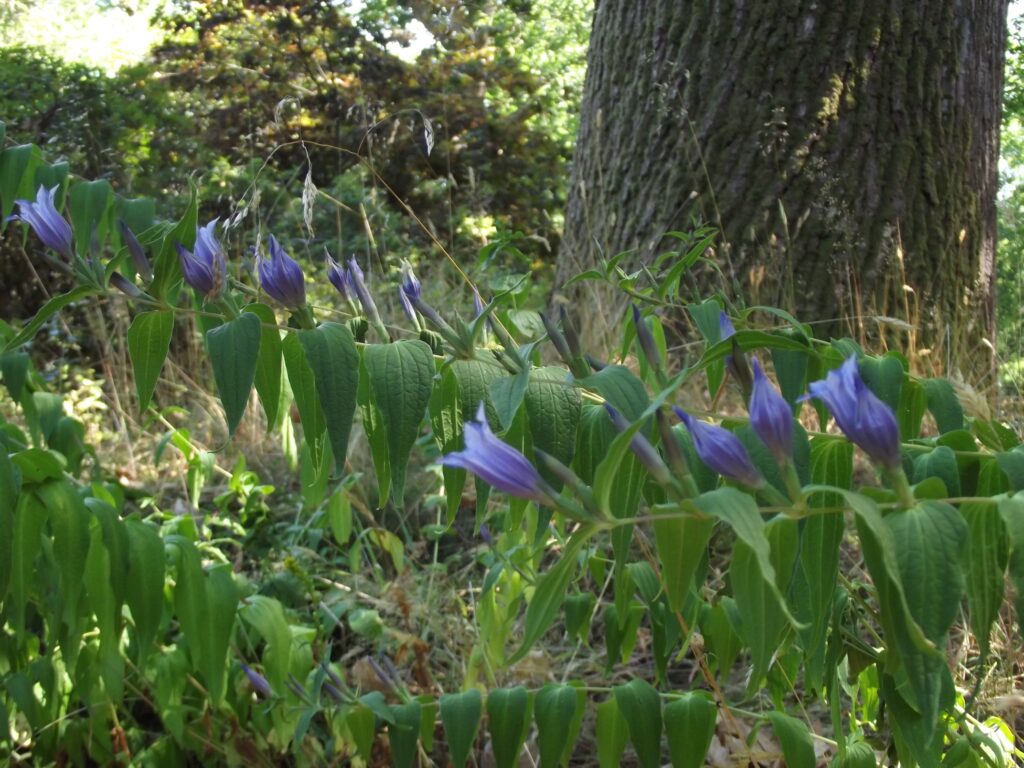
This is the only site in the UK where the willow gentian (Gentiana asclepiadia) has naturalized. The garden holds the national collection of Stewartia, which includes a Champion Tree. This is a Tea tree (Melaleuca alternifolia) with single white Camelia-like flowers.
At the far eastern side there is a nursery where cuttings are cultivated, with many from High Beeches, and some from elsewhere to ensure their continued survival. Plants and information are shared with other gardens, including the nearby Leonardslee and Wakehurst.
The ponds that run through the garden were dug after the Second World War, and today they are sometimes used for irrigation via a bucket! The ponds are linked by deep valleys called ghylls. At Centre Pond we admired the magnificent Gunnera manicata and surrounding planting.
This is a garden to visit at different times of the year to appreciate not only the many Champion Trees, but all the different colours on display. For instance, the rhododendrons, magnolias and azaleas, the many rare and unusual wild flowers, the beautiful spring blooms of bluebells, primroses and lily of the valley and of course the spectacular colours of autumn, to mention but a few.
We finished our afternoon with a much-needed cup of tea and a beautiful piece of cake and thanked Sarah and Jeremy Bray for sharing their wonderful garden with us all.
Report by Ian and Barbara Voller
Photos © Ian Voller