The post The Estufa Fria – Lisbon’s best kept secret? first appeared on Sussex Gardens Trust.
]]>You can probably name some of the largest glasshouses in the world, for example the Eden Project’s biodome and Singapore’s Flower Dome. Yet it is quite likely that you have never heard of the largest shade house in the world – that is, with no glass or equivalent and no heating. This appears to be Estufa Fria, which translates as `cold greenhouse’. The official Lisbon tourism website does describe it, though not very prominently given that it is probably the world’s largest example of its kind, as `one of the most important green spaces in Lisbon, considered an authentic living museum, with its small lakes and waterfalls, statuary, and hundreds of species of plants’.
In the early October sunshine, my wife and I took a morning bus ride from our hotel to a terrace at the northern end of Lisbon’s Parque Eduardo VII (the same King Edward VII after whom the sanatorium in Easebourne, Sussex, which featured a Jekyll garden, is named). On its eastern side is the Carlos Lopes Pavilion, built for the 1922 World Expo in Brazil then relocated to Lisbon in 1932. The terrace offers a wonderful view across clipped box hedging down to the city and the river Tagus.
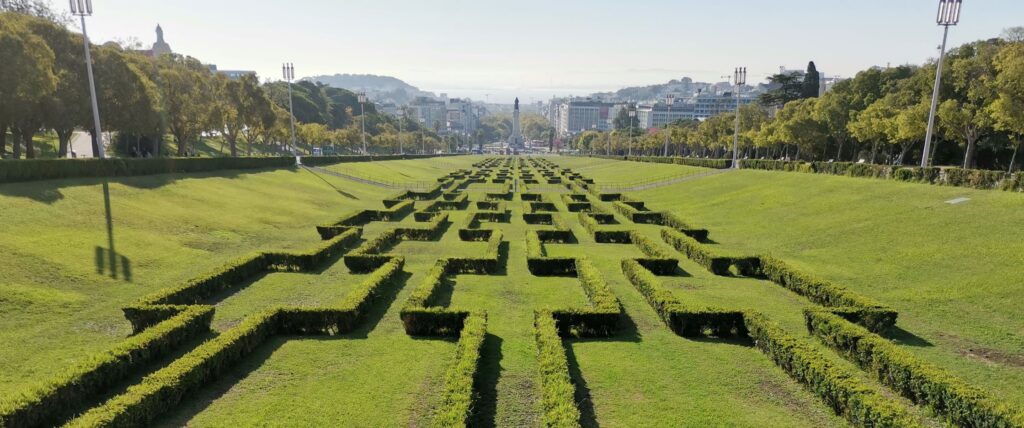
Our guidebook mentioned a hothouse on the park’s western side so we decided to take a brief detour before continuing to the city centre. Initially there appeared to be nothing there beyond the railings that edged the path, but a view emerged of a curious surface stretching out into the distance. Vaguely resembling a massive roller-skate rink, this turned out to be the roof of the Estufa Fria, which is sunken into a former basalt quarry.
Continuing down to our right, we found a lake and the main entrance where, being over 65, I had to pay all of €1.55.
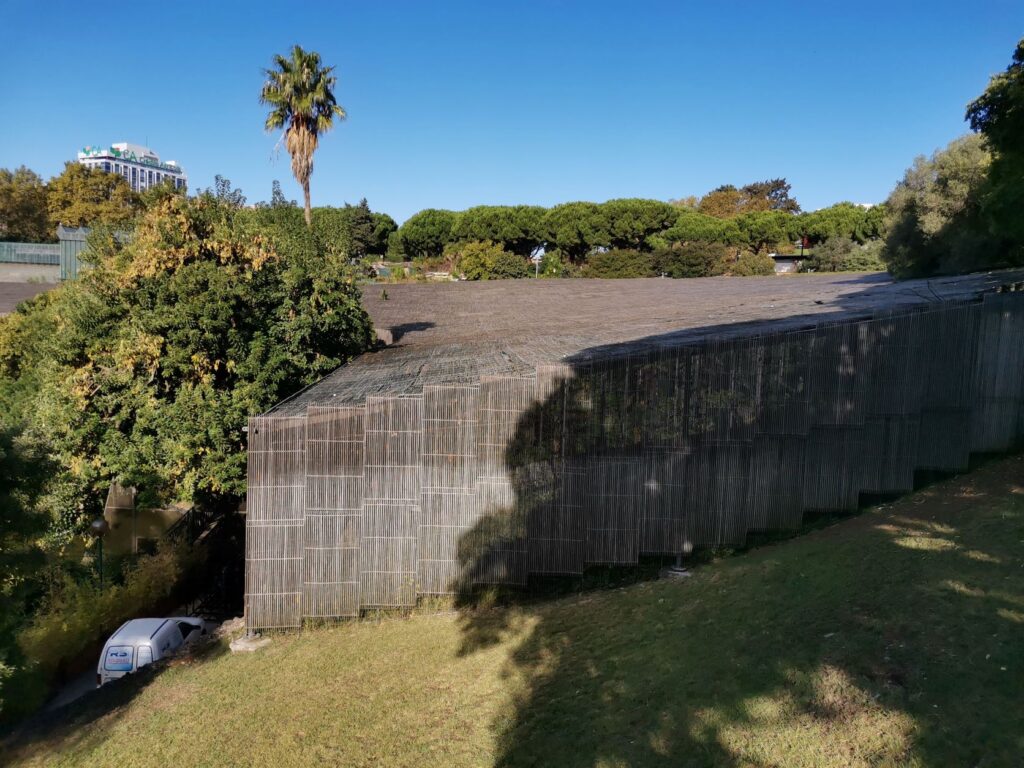
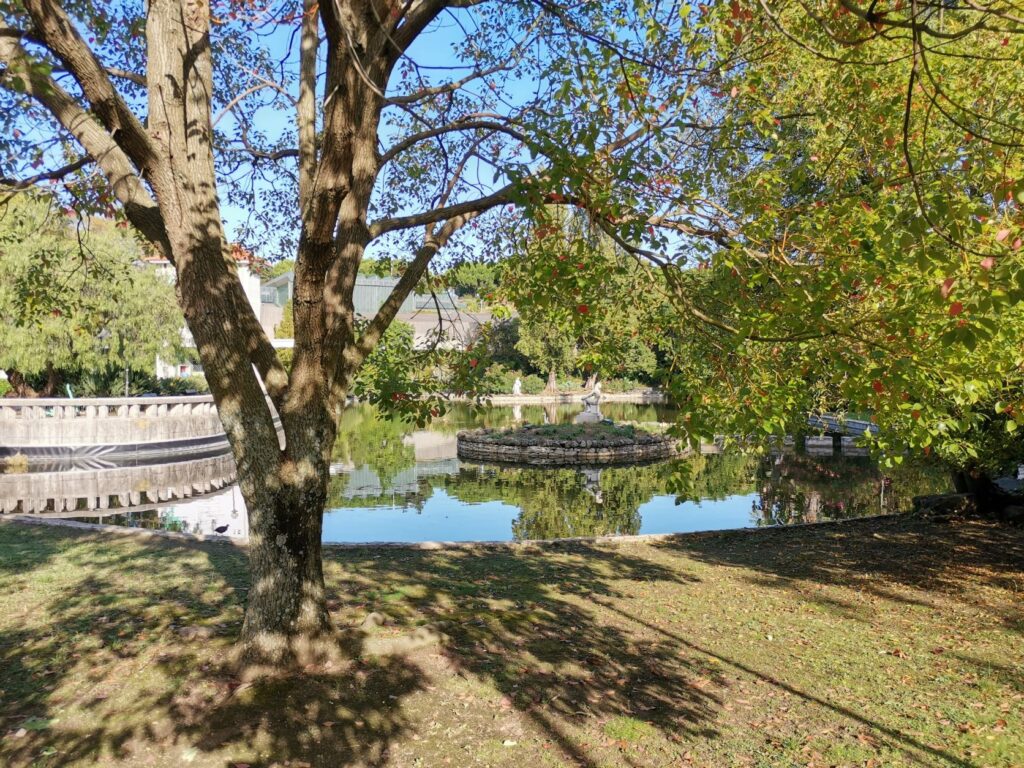
Once inside, a stunning, magical, landscape opened up beneath the slatted roof.
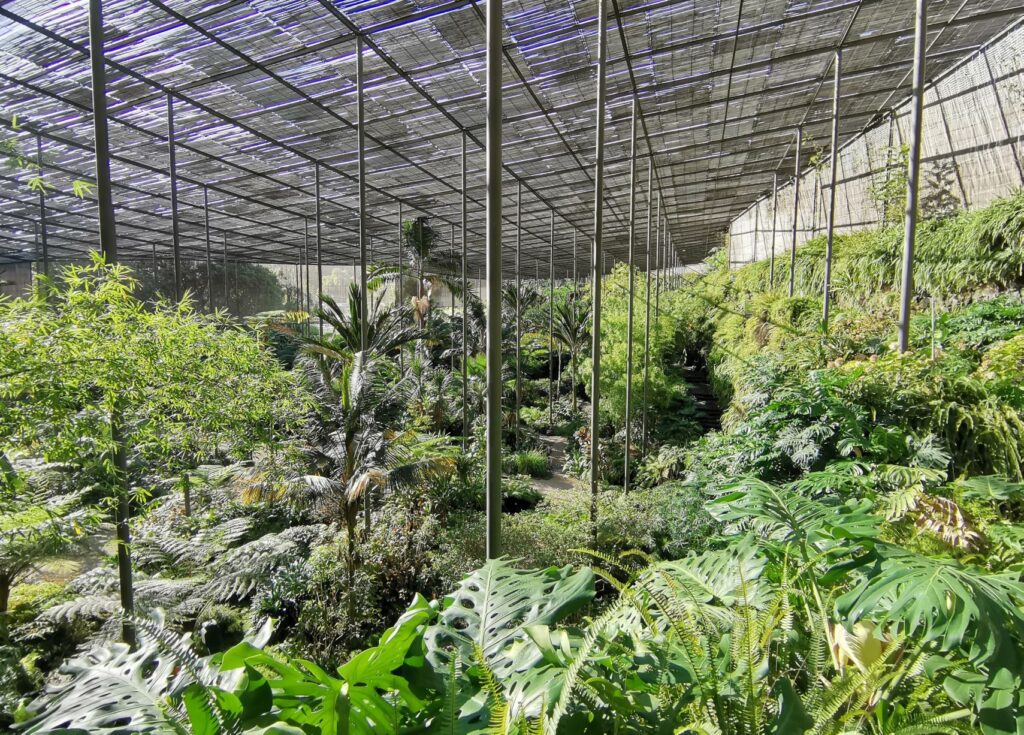
The planting is a mass of tree ferns, rhododendrons, camellias, green bananas, colocasias, strelitzias and more. There are pools, statuary and arches intertwined with winding gravel paths and stone steps that enable you to meander back and forth and discover new perspectives. It is a tranquil and enchanting space.
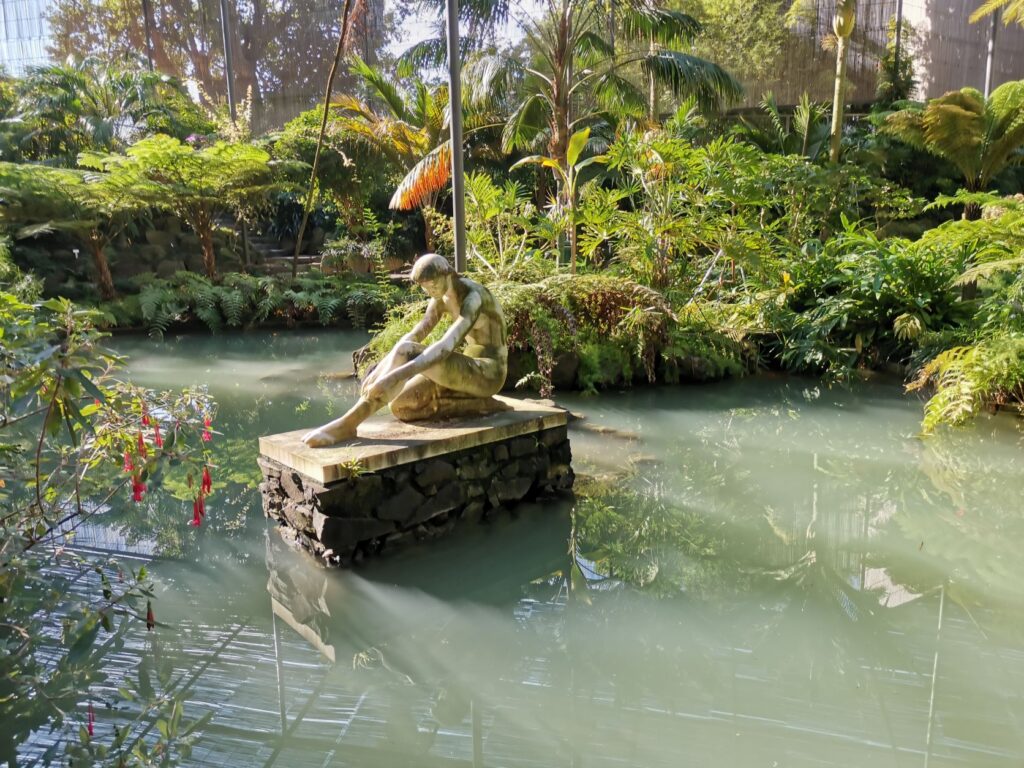
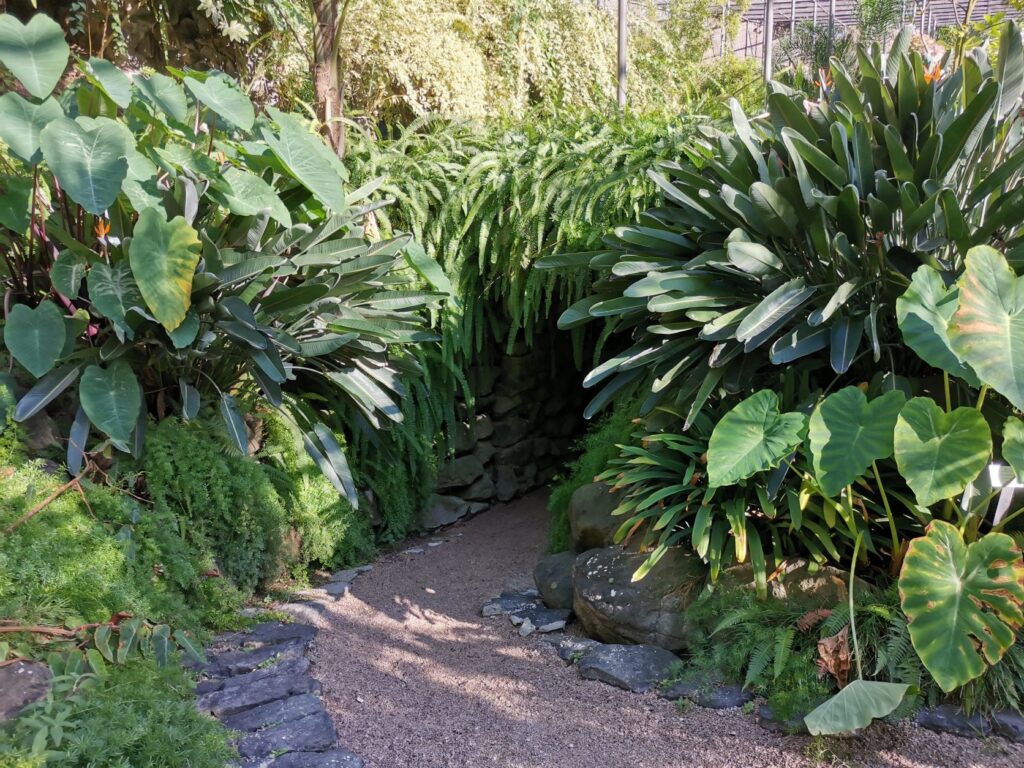
In fact, there are three greenhouses here altogether. The Estufa Fria covers an area of over 8,000 m2. As mentioned, it has no heating and the gaps between the slats are open to the outdoors. At the rear, hugging the back wall of the quarry, are two glass-roofed sections; the Estufa Quente (warm greenhouse), containing coffee plants and mango trees, and the Estufa Doce (sweet greenhouse), which houses cacti and other succulents.
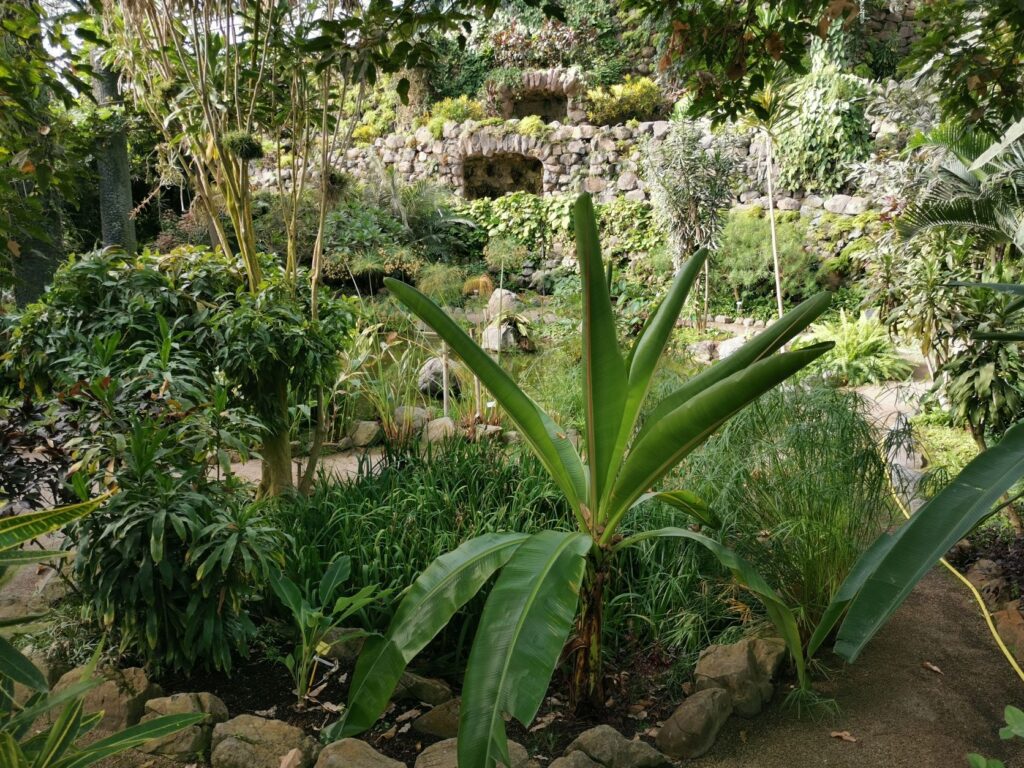
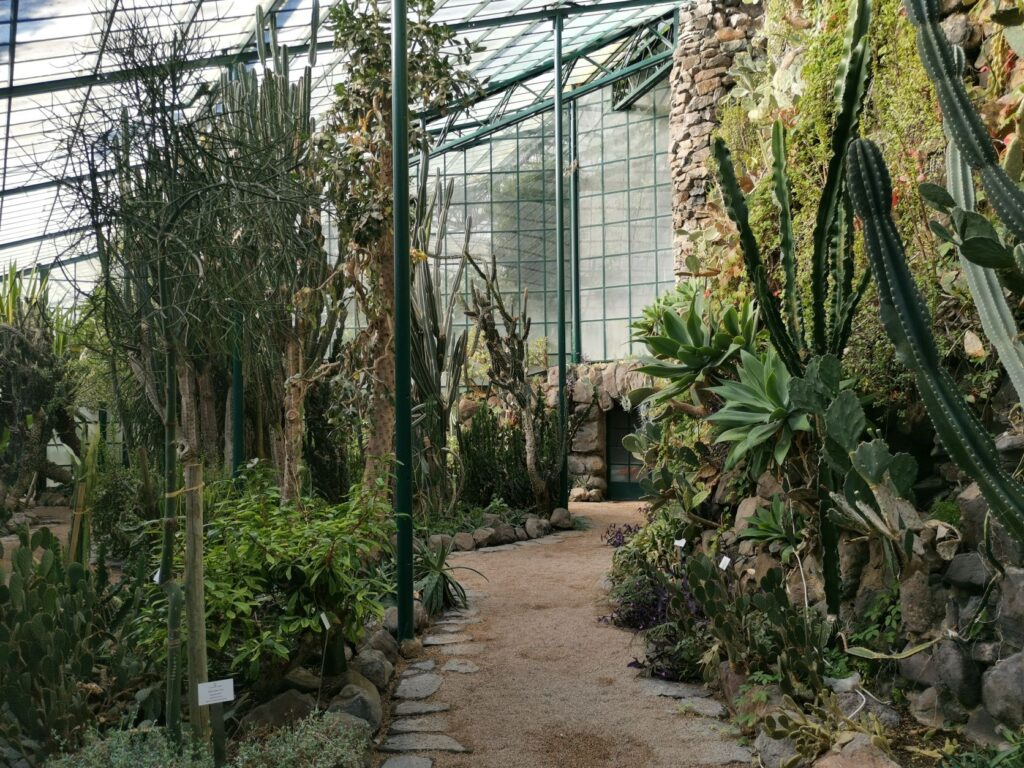
The combined area of the three Estufas is some 11,500 m2. For comparison, the Temperate House in Kew Gardens, the largest surviving Victorian glasshouse in the world, has an area of 4,880 m2[i].
What is the history of this spectacular structure? In 1926 the painter and architect Raul Caraphina discovered a disused basalt quarry adjacent to the park, which a local gardener had been using to shelter plants. Caraphina transformed the space into a massive greenhouse, the basalt walls forming a naturalistic setting for tender and exotic plants, water features and stone structures.
The Estufa Fria opened officially in 1933. In the 1940s the Parque Eduardo VII was developed into the form that can be seen today, adding a lake at the entrance to Estufa and a theatre called `The Nave’ at it side, which extends beneath the park. The two smaller Estufas, which were the idea of Pulido Garcia, an engineer, followed in 1975.
This astonishing horticultural treasure could well be Lisbon’s best kept secret. Information on the internet is scant; here, for the most part, I have relied on the leaflet and map I received on entry. If you should travel to Lisbon, please consider boosting the Estufa Fria’s visitor numbers. I am sure you would find it rewarding.
Article by Paul Tosey
Photos © Paul Tosey
[i] https://en.wikipedia.org/wiki/Temperate_House,_Kew_Gardens accessed 06-11-2022
The post The Estufa Fria – Lisbon’s best kept secret? first appeared on Sussex Gardens Trust.
]]>The post Gardens of the Amalfi Coast, Italy first appeared on Sussex Gardens Trust.
]]>Gardens of Augustus, Anacapri
One of the trips we took was a boat ride to the nearby island of Capri, beloved home of Gracie Fields, and other well-known celebrities. Once here we explored the town of Capri, before taking a small coach up into the hills, around very narrow bends, to the smaller, more intimate town, of Anacapri.
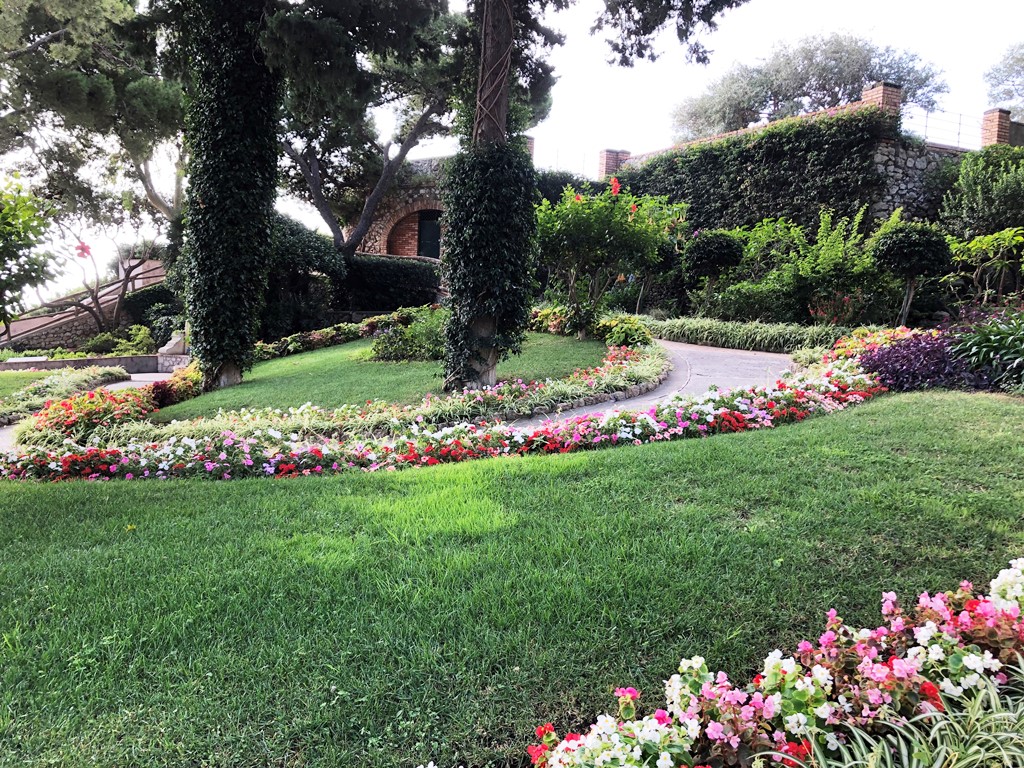
Here we were free to go shopping, have a coffee, or just appreciate the beautiful views. So, I headed to the Gardens of Augustus where at a cost of just one euro one could gain entry. The gardens were originally called the Krupp Gardens, after the German steel industrialist who established his mansion and gardens here in 1900s. However, it was renamed the Gardens of Augustus, after the first Roman Emperor, following the First World War.
The lovely terraces have gentle paths and beds filled with flowers such as dahlias, geraniums, and begonias, with cypress trees and pines. It is said to hold the most important plants on the island. The panoramic views to the sea and the rest of Capri are wonderful. There was an incredibly steep switchback path down the cliff to Marina Piccola, where Friedrich Alfred Krupp used to moor his private yacht when visiting his villa and gardens, but now these are closed due to falling rocks.
Villa Rufolo, Ravello
The second garden I visited was in Ravello, a small but affluent town up in the hills further south, and still overlooking the Amalfi coast. It was a renowned destination for artists, musicians and writers including Virginia Woolf, Greta Garbo, Tennessee Williams, and Jacqueline Kennedy.
The Villa Rufolo was built in the thirteenth century by a wealthy merchant of that name. However, over the centuries it fell into disrepair until it was rescued by a Scottish botanist, Francis Neville Reid, who bought it and turned it into a romantic nineteenth century garden and gothic villa; half ruin, half home. It was subsequently much admired by the elite of the times, including Richard Wagner, who said he had found his ‘magical garden of Klingsor’ and where he wrote the final act of ‘Parsifal’ inspired by the Villa Rufolo and its gardens.
In 1953 the Ravello Music Festival was established in remembrance of Wagner and now takes place every year in the summer. It is based in the Villa Rufolo gardens. The stage for the orchestra projects out over the sea from the lower of the two terraces, with the audience facing the orchestra, the sea and spectacular views.
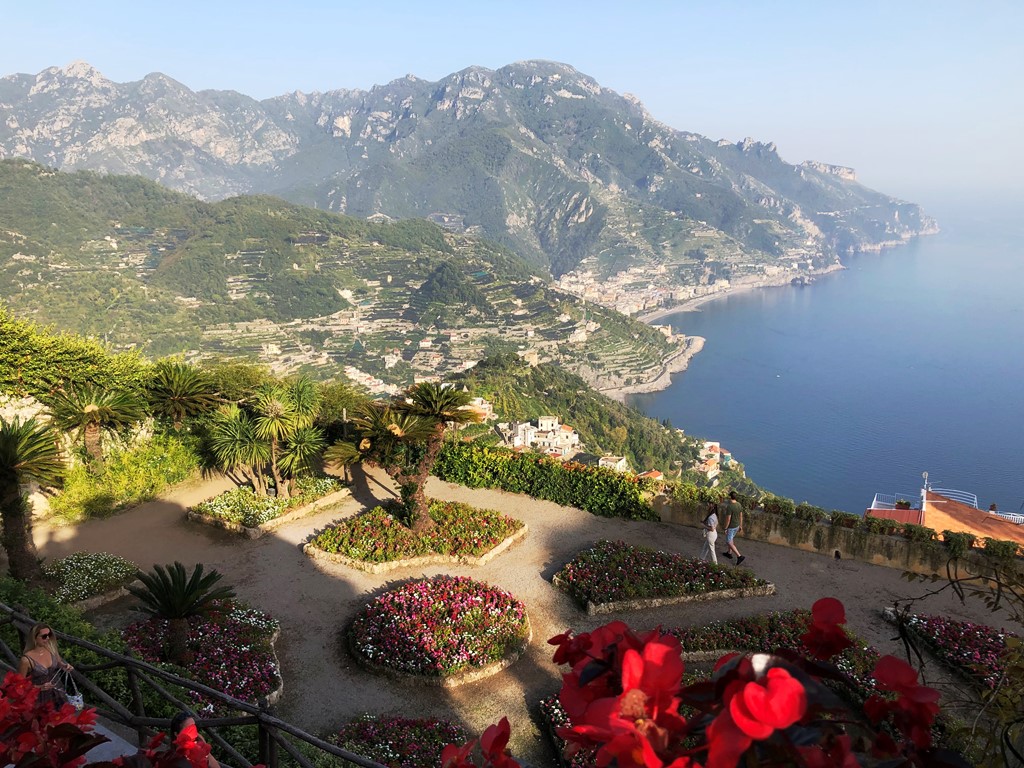
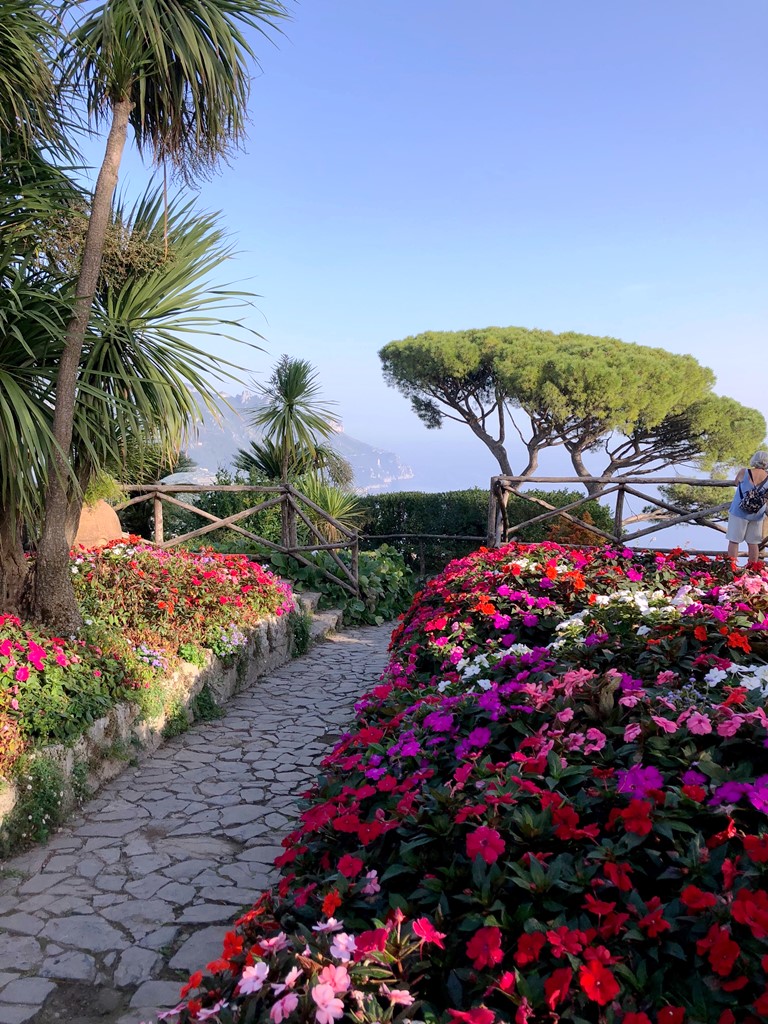
The two terraces, or parterres, are planted with exotic flowers in small geometric beds which can be walked around. Umbrella pines and cypress trees add shade. The whole garden leads towards the terraces and the stunning views. There are fountains and pools, different levels and many steps with various entrances into the villa, whether arch, courtyard or hall.
Apparently, there is a team of gardeners, many descended from the original team employed by Neville Reid to create his romantic vision. When I walked around there seemed to be plants from every corner of the world: oleander, bottle brush, begonia, anthurium and bougainvillea to name just a few, and of course all were flowering in the warm sun.
Article by Maggie Weir-Wilson
Photos © Maggie Weir-Wilson
The post Gardens of the Amalfi Coast, Italy first appeared on Sussex Gardens Trust.
]]>The post Italian gardens in Ireland – Powerscourt first appeared on Sussex Gardens Trust.
]]>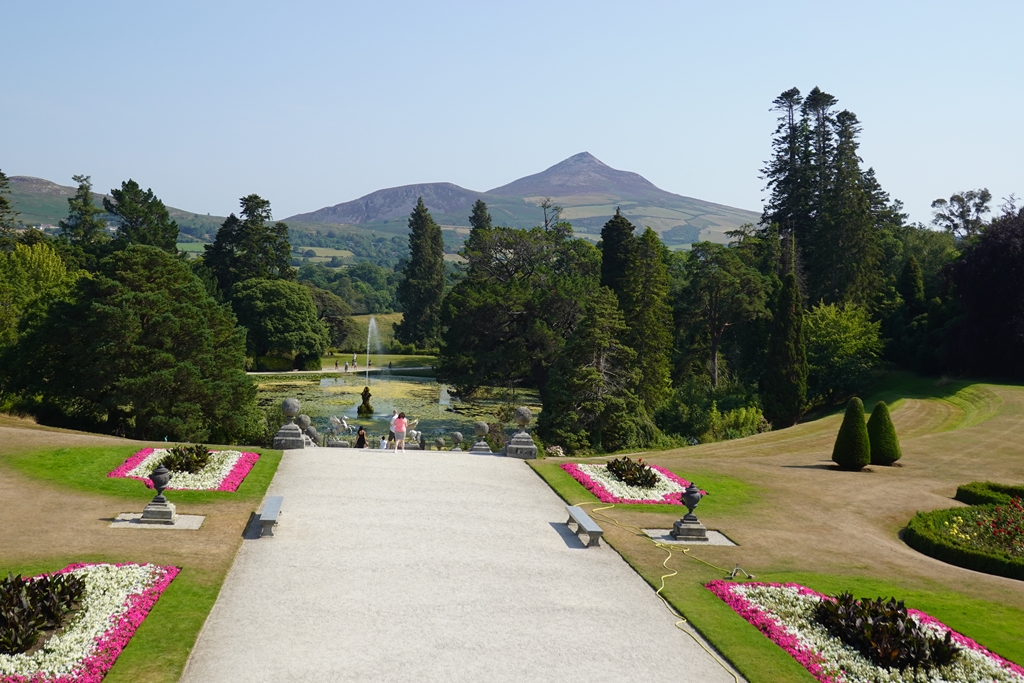
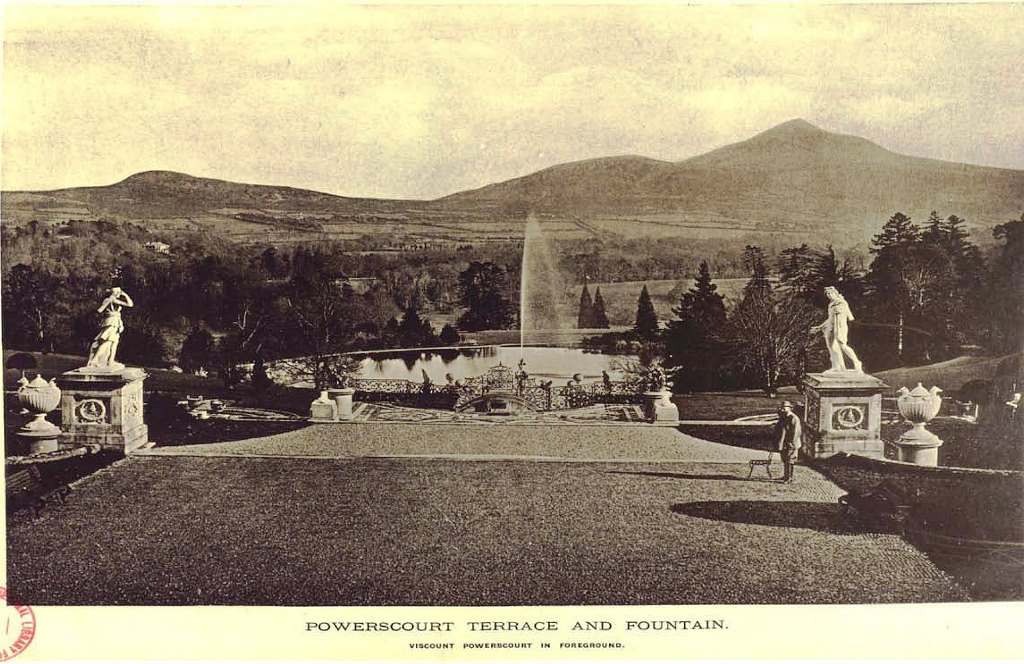
The nineteen hectares of gardens we see today were created by Viscount Powerscourt in the mid-1800s. He had inherited the title and the estate, aged eight, in 1844. The top terrace on the south face of the house has a most astonishing view – a classic example of borrowed scenery, or shakkei in Chinese. Almost in line with the main axis of the Italian garden is Sugar Loaf Mountain. At just over 500m it dominates the skyline together with other peaks in the Wicklow Mountains. The fountain in Triton Lake takes your eye directly to the mountains beyond, in the same way that the main path and the terracing on either side directs your view to the lake. The grass terraces on either side of the axial path are symmetric and involve six different levels with parterres on the second level. Statuary and balustrading also help steer your eyes to the magnificent fountain in the lake.
However, the view was not so wonderful when Mervyn Howard Wingfield, Viscount Powerscourt, inherited the estate in 1844 – there was a ‘hillock’ in the way that partially blocked the view of the lake. His father had made plans for the garden before he died and work had been carried out on the slope on the western side. Excavations were clearly needed to create what we see today – how did they do that I wondered?
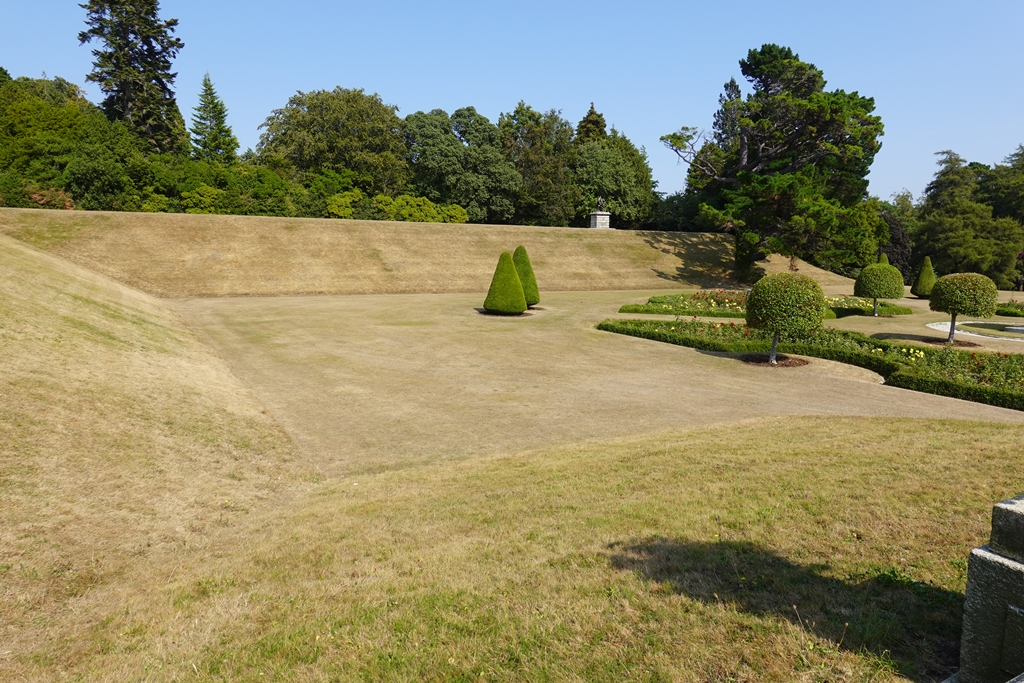
Fortunately, the Viscount recorded descriptions of some of the work involved in his book, A Description and History of Powerscourt, written in 1903. Everything would have been dug by hand – it was not unusual in the eighteenth and nineteenth centuries for hilltops to be flattened for a new house, for example Waddesdon Manor in Buckinghamshire, or for large lakes to be created (think of Capability Brown’s work). Questions came to mind. How much soil was excavated? What did they do with the spoil? Where did they get the manpower from and how long did it all take?
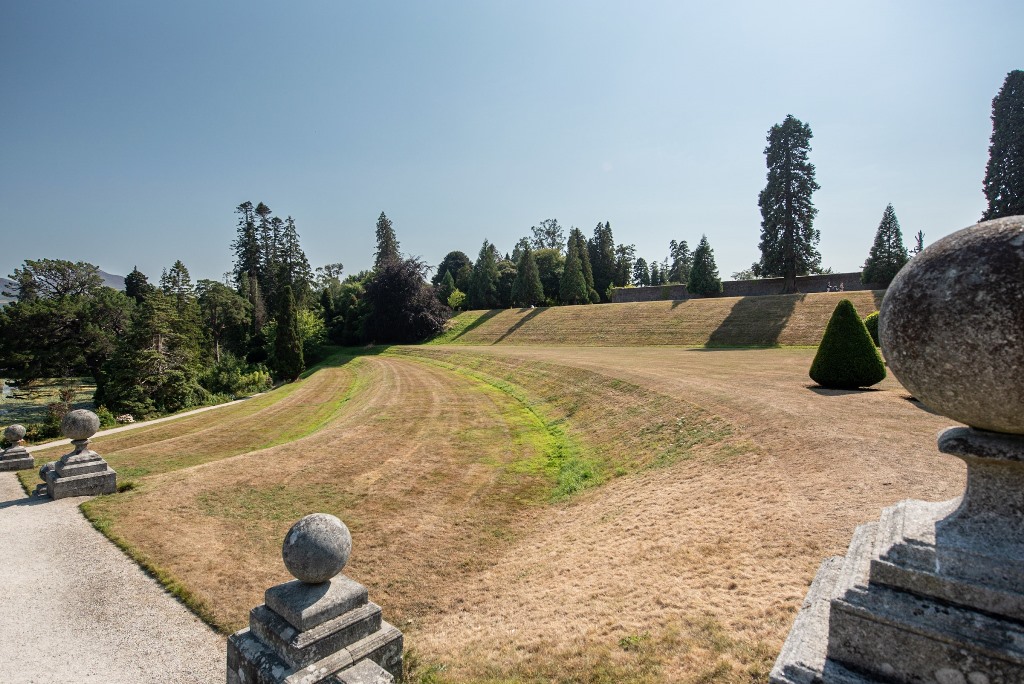
Delving through the Viscount’s book we can find some answers. Labour was very cheap during the 1800s and the Viscount recalls, ‘there were a quantity of poor people on the estate up at Glencree who were wanting employment and we put them to work at about six shillings a week. I had up to 100 men on it at one time’.[1] The excavated spoil was moved to the pond (Triton Lake). They made a roadway down the middle of the terrace, before the flights of steps were built and carted the gravel down the slope and laid it over the whole bottom of the pond ‘about two and a half acres, eight to ten feet thick’. This resulted in the pond then being six feet deep – it had been nearer sixteen feet deep when they started. The gravel bank leaked a great deal but fortunately they found some ‘marly earth’ (which contains a lot of clay) on the eastern side of the terrace which they moved to the bank to make it watertight. The rest of the excavated soil was moved to create the eastern raised terrace to match the other side.
Powerscourt estate marketing material states that the work took a hundred men over twelve years to build. To test this out I re-visited JC Loudon’s advised rate of hand excavation.[2] His rule was one labourer could excavate ten cubic yards in a day on soft ground, plus another labourer to move the excavated material. Using the data about surplus earth being moved to the lake suggests the total volume excavated was in excess of 40,000 cubic yards. With a hundred men at work, half digging and the other half removing soil, this would have taken over eight hundred days to complete, i.e., two and a half years. This does not look promising… However, the Viscount writes: ‘we did part of it, and then stopped on account of the expense and waited until the following summer and then began again’.[3] This would make more sense if they worked for seventy to eighty days each year during good weather. Remember this part of Ireland has an annual rainfall of 741mm (29.2 inches). You had to have a long-term vision in those days – fortunate then that the seventh Viscount Powerscourt lived until 1904 aged 58 – long enough to record the work done on the house and the gardens and to enjoy the results as well as posing in the image below. Not only was my visit in 2022 very enjoyable with stunning views, wonderful statuary and varied planting styles, it also led to a construction quandary to solve – happy days.
[1] Viscount Powerscourt, A description and history of Powerscourt (London: 1903), p. 78.
[2] John Claudius Loudon, An Encyclopaedia of Gardening (London: 1826), p. 378.
[3] Viscount Powerscourt, A description and history of Powerscourt (London: 1903), p. 80.
Article by Pat Dauncey
Photos © Pat and Chris Dauncey
The post Italian gardens in Ireland – Powerscourt first appeared on Sussex Gardens Trust.
]]>