
Having visited the Peloponnese before Covid we were interested to revisit sites we had not been able to get to before. We had read Mani – Travels in the Southern Peloponnese by Patrick Leigh Fermor (1915 – 2011) and particularly wanted to visit Kardamyli, where Leigh Fermor had lived with his wife Joan. They bought land in 1962 and started building their home in 1965, with a team of local workmen under Nikos Kolokotronis, a master mason. (Whilst I was rereading the book in the Kolokotronis hotel Nikos Kolokotronis’s grandson came over to tell me about his grandfather and their family connections). After the death of Leigh Fermor, and his wife, the house was left to the Benaki Museum and it is possible to visit out of the main tourist season. We explored the area of Kardamyli that Leigh Fermor had written about and the discovery of a vegetable garden in old Kardamyli presented an opportunity to share some history.
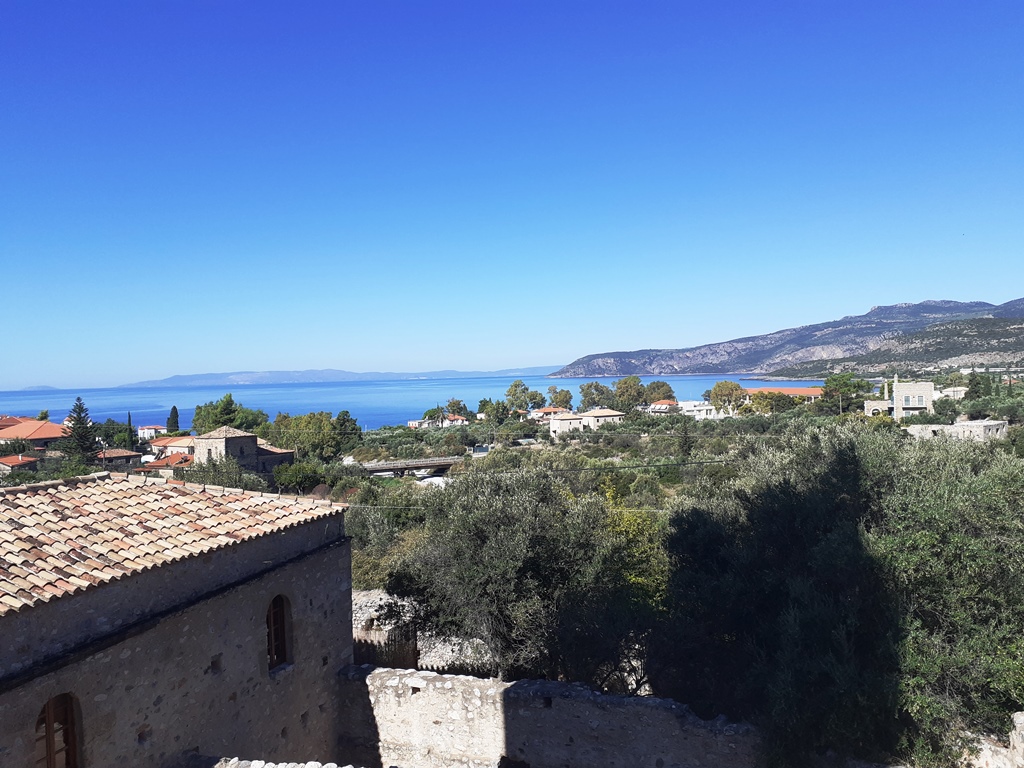
Kardamyli, a coastal village in the Peloponnese, has been much loved by writers. It is mentioned in Homer and holds the scattered ashes of Bruce Chatwin. Leigh Fermor wrote of ‘houses, resembling small castles built of golden stone … The mountains rushed down to the water’s edge with, here and there among the whitewashed fishermen’s houses near the sea, great rustling groves of calamus reed ten feet high and swaying together in the slightest whisper of wind’. Today it is a small town with a thriving tourist industry, overlooked by the Tower of the Mourtzinos-Troupaki family.
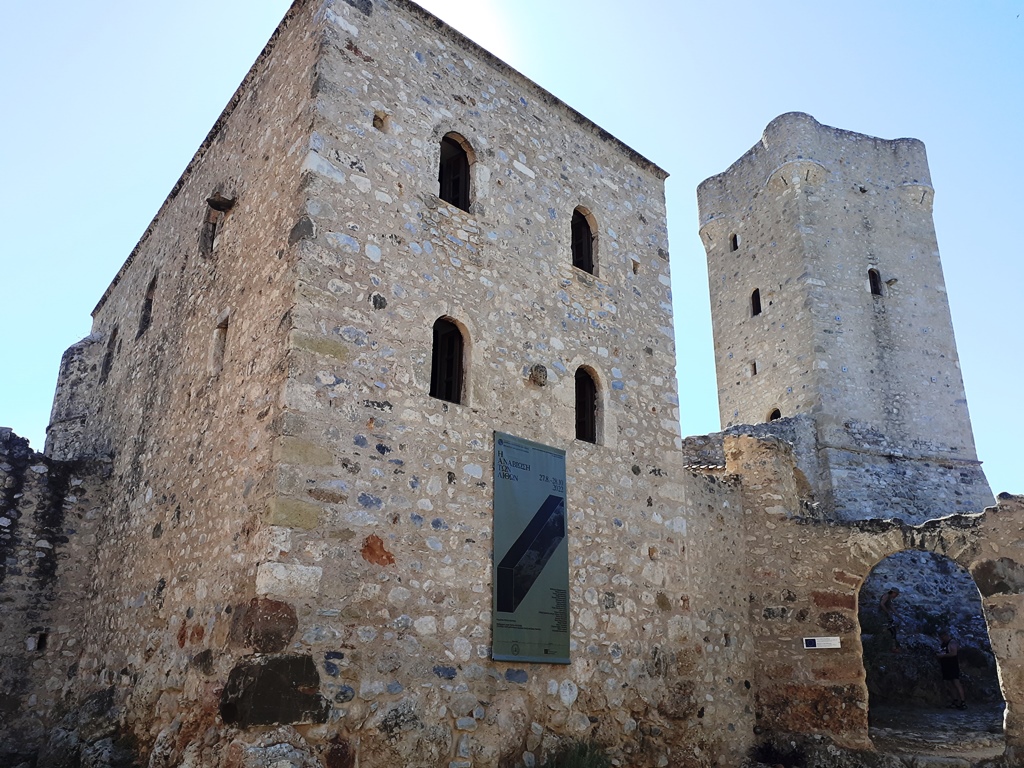
The tower is part of a fortified house: a set of buildings, including its own church, established in the seventeenth century by an ancestor of the Mourtzinos-Troupaki clan, a man called Michael Palaeologus. His name recalls the last of the Byzantine emperors, and local families have claimed imperial forebears.
Although this part of the Peloponnese, which is known as the Mani, has astonishing scenic beauty, it has always been a harsh environment. In recent centuries it was controlled by a group of patriarchal clans, headed by the Mourtzinos-Troupakis. In 1821, the heads of the Mani clans met at the house in Kardamyli and were determined to liberate the peninsula from the Turks. They were successful.
To be effective, a fortified house needed to be self-sufficient. The house in Kardamyli had its own underground cistern, forge and olive press. It also had its own garden, to provide vegetables for the family.
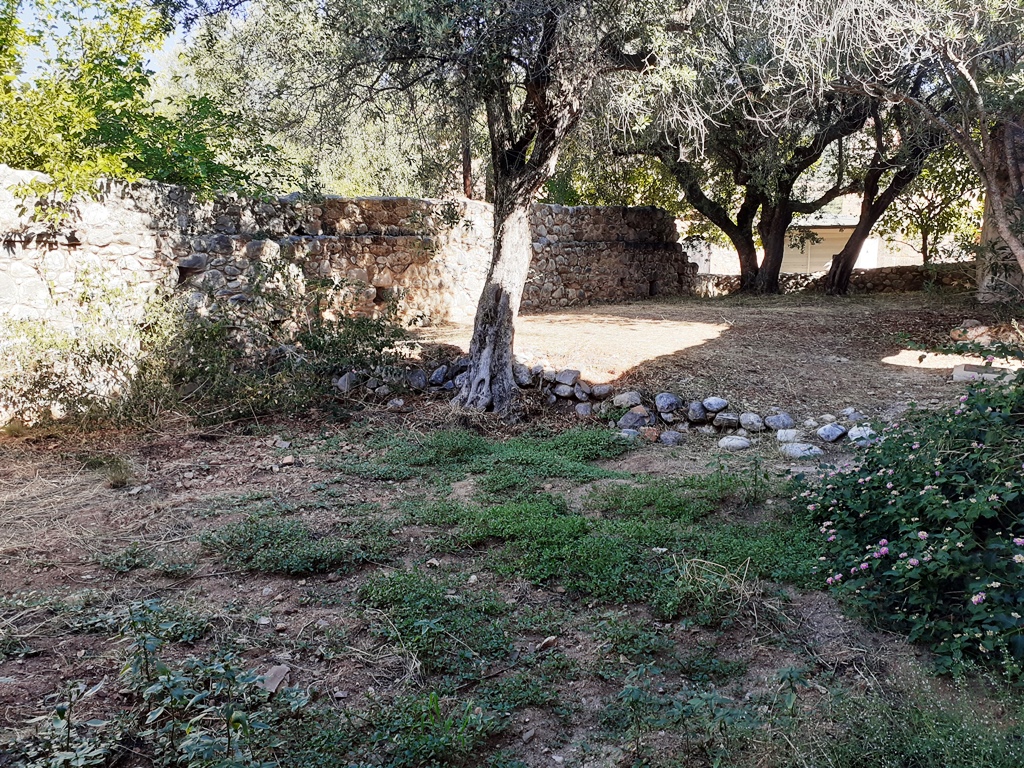
During the excavation of the site, we are told, it was discovered that the walled garden had traces of vegetable planting. We do not know what vegetables were grown, and all we have now is a derelict space, nine metres by twenty-three, nestled close to the south side of the tower. The garden is surrounded by stone walls, and inside a few olive trees. The house has been renovated and is used to exhibit installations by modern local artists.
Article by Alan and Jennie Starr
All photos © Jennie and Alan Starr