
Ilnacullin, a fifteen hectare (37 acre) island garden, is located in the sheltered harbour of Glengarriff in Bantry Bay, south west Ireland. It is not straight-forward getting there. From the small ship on which we were circumnavigating Ireland, it involved a zodiac ride from the anchored ship to Bantry, then a coach drive to Glengarriff, followed by a local ferry to get out to the island, passing a group of common seals en route and a sea eagle’s nest in a tall tree. Expectations were rising. I had failed to do any homework before arriving, having never been to the south or west of Ireland before. The sun was shining and this was Ireland in August – already this was not quite what I expected.
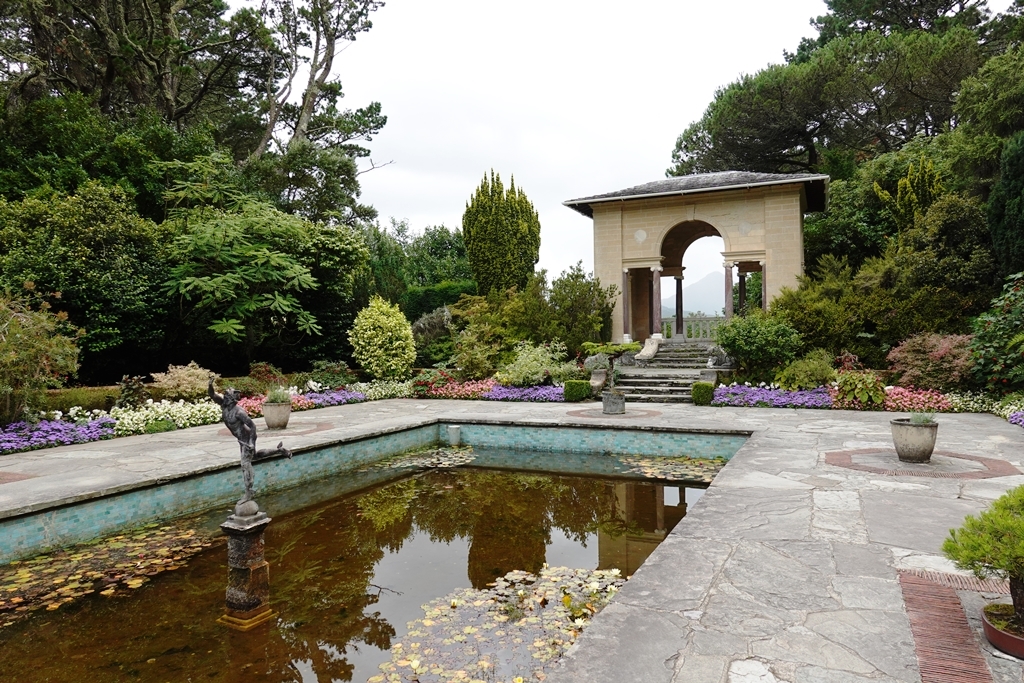
When we got off the ferry we were all given a guide book with an image of the Italian sunken garden on the cover. This looked vaguely familiar … Sedgwick Park came to mind, followed by West Dean Gardens, both in Sussex. Then I realised that the common denominator was Harold Peto, the arts and crafts architect, turned garden designer who hugely admired the Italian Renaissance. Most of our group were not avid garden historians so I had to keep my excitement to myself.
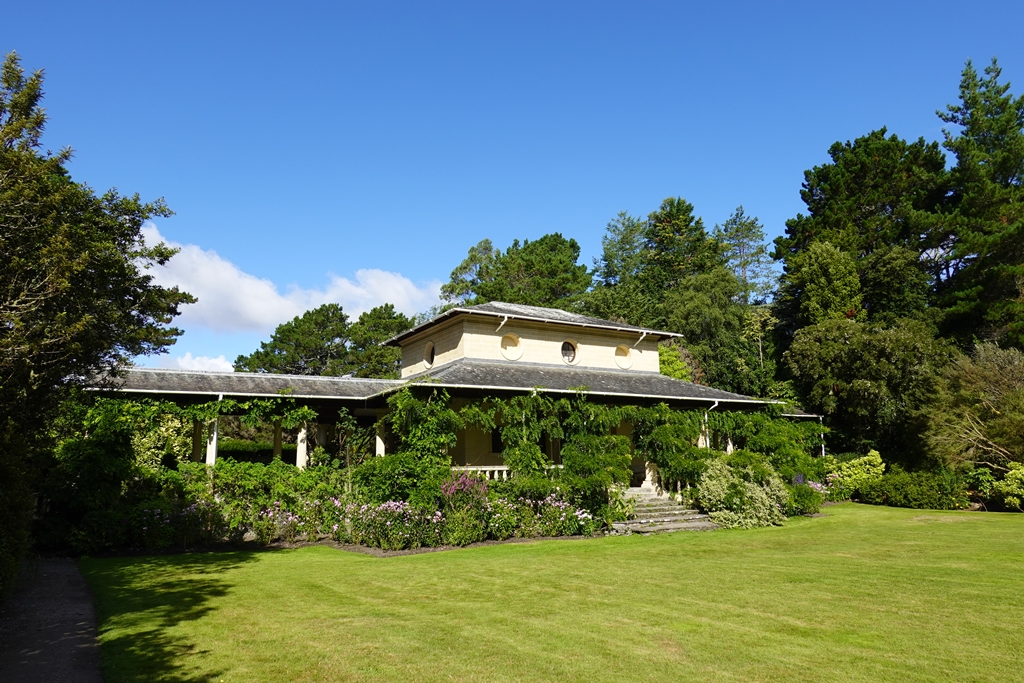
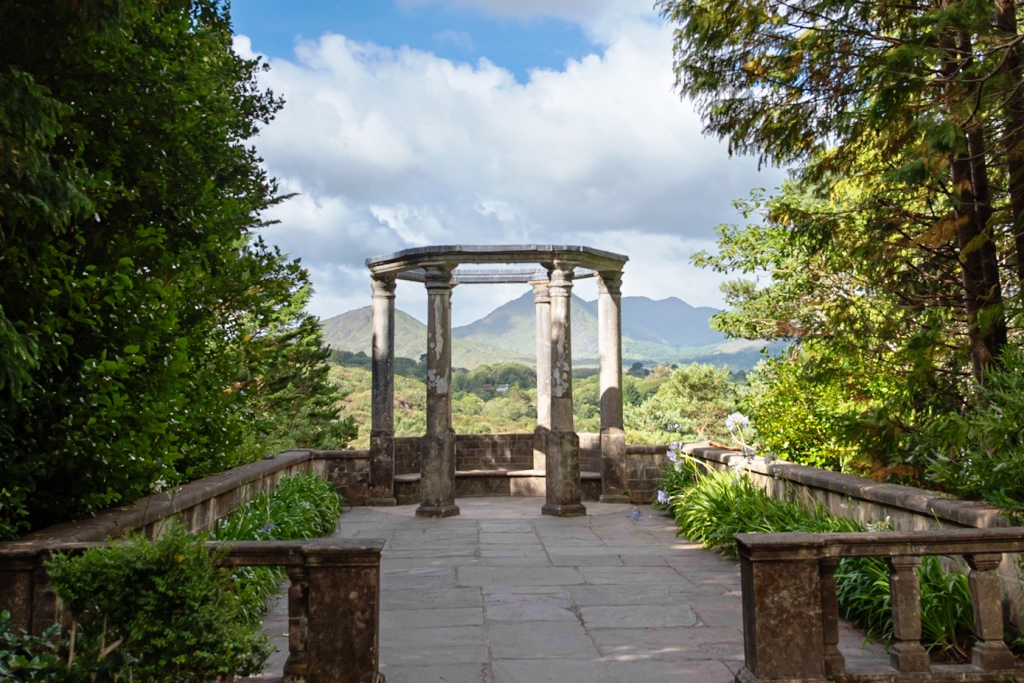
Our first port of call had to be the sunken Italian garden with its casita (Italian tea-house) made from Bath stone, colonnades, flights of steps and the pool surrounded by carefully positioned potted plants. How well it fits into the natural setting with views of the Caha mountains (An Cheacha in Irish) and the sea in the distance.
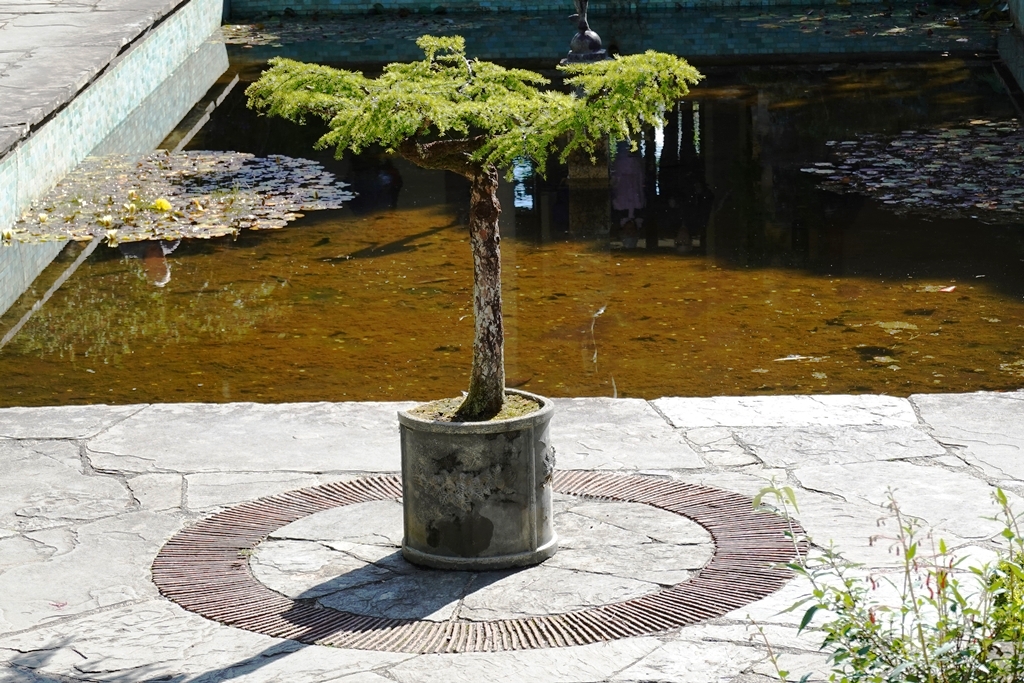
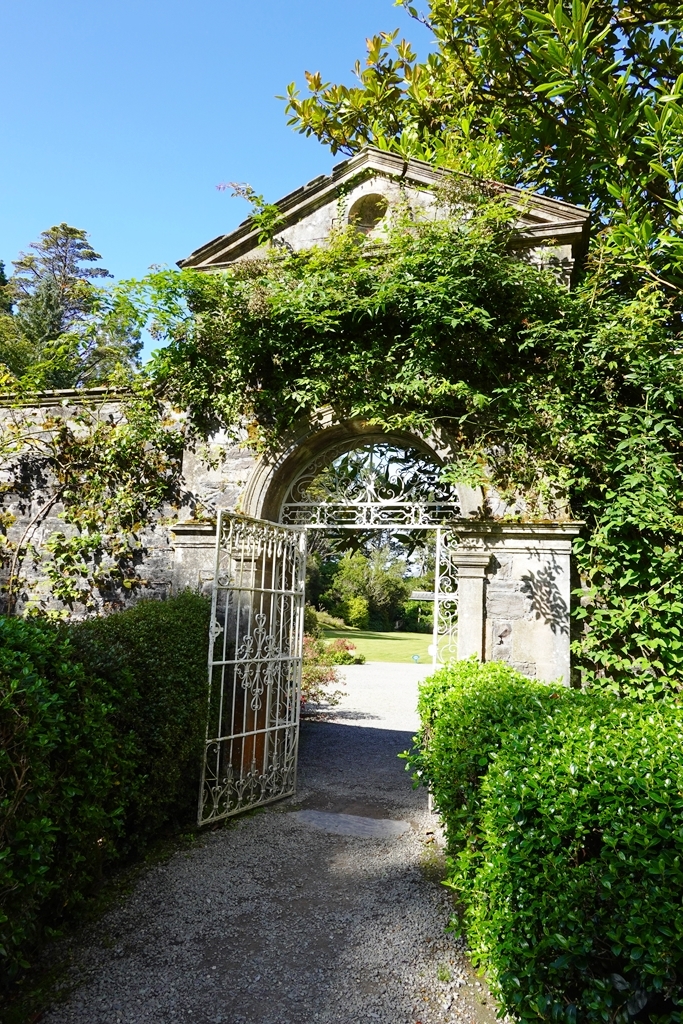
A gardener was pruning the wisteria which climbs on the casita columns – this must have been a wonderful site earlier in the year. The walled garden contains the nurseries for the whole island with stone and brickwork walls supporting a collection of climbing plants including climbing roses, just coming to an end. The ironwork gates gave intriguing glimpses of what might be on the other side.
As an island garden, it naturally lends itself to borrowed views out to the harbour, the wider sea and the surrounding hills and mountains. Not far from the Italian garden an avenue of Italian cypress leads up to the Grecian Temple with magnificent views of the sea and mountains. Another fine view was from the top of the Martello Tower complete with a pod of dolphins playing in the bay. This is the oldest building on the island and looks slightly out of place with the rest of the garden. I wondered what its history was….
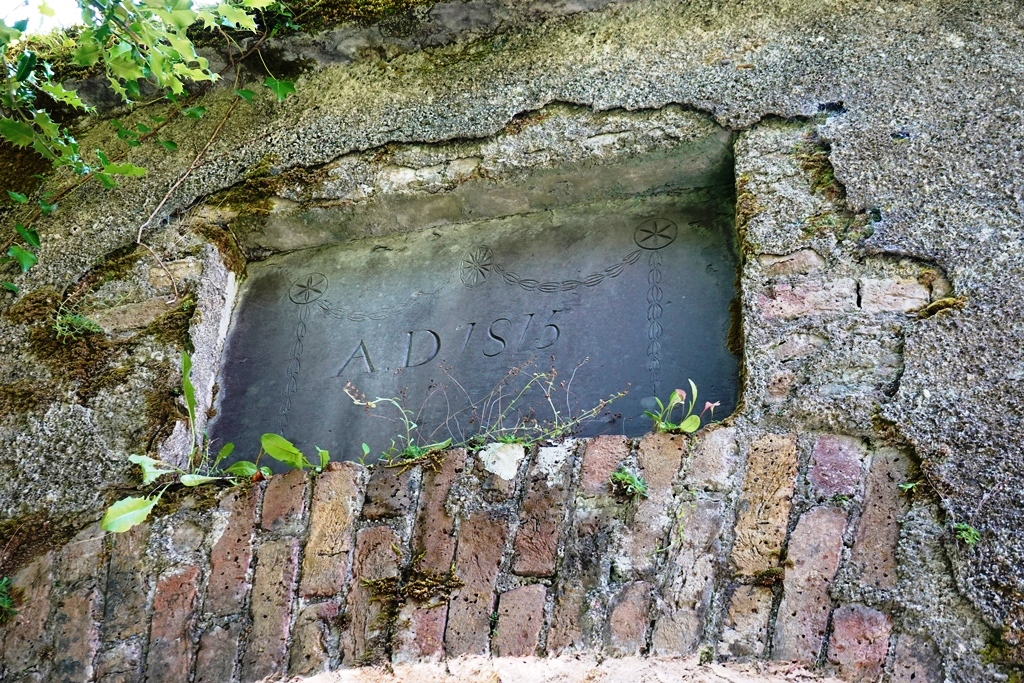
There was no garden on the island before 1910, only the Martello Tower. This was built by the British around 1815 in response to an attempted French invasion in 1796 led by the Irish patriot Wolfe Tone, which had only been thwarted by the weather. By 1910 the tower was deemed unnecessary and the War Office sold the island to a Belfast born Scottish MP called Annan Bryce, who acquired an island which was largely bare rock and peat bog. Bryce, who was interested in both horticulture and architecture, commissioned Harold Peto to design a mansion and a garden for him. The mansion was never built but the garden was created. This involved transporting huge quantities of soil and hummus from the mainland (all via the small ferry boats) and blasting rocks to create spaces to plant the coniferous shelter belt all around the island. The Bryce family continued work on the garden until 1953 when it was gifted to the Irish people.
The garden has a feel similar to Tresco Abbey Garden in the Scilly Isles; it is spectacular both for its incongruous presence on a tiny island, for its array of native and exotic plants and for the ingenious design elements. If you are ever in that part of Ireland it is a must to visit.
Article by Pat Dauncey
All photos © Pat & Chris Dauncey