
Unexpectedly in June, I was invited for a week’s holiday in Barbados. Well, why ever not! There was little time to research what I might hope to visit and the majority of recommendations in the guide books were for turtle watching, snorkelling, beach trips and rum tasting. However, I did see an entry for two botanical gardens and hoped that my friend and I might be able to visit one of these.
Chatting to our taxi driver from the airport and mentioning gardens he immediately said that in his opinion the place to go was Hunte’s Gardens. Apparently, the owner and horticulturalist, Anthony Hunte, was usually there to greet one at the end of the visit. On arrival at our hotel, and after a rum punch and a swim, I looked up the garden’s website. It proclaimed it to be ‘the most enchanting place on Earth … a place of serenity where you can feel peace of mind and the tranquility of your soul whilst being surrounded by nature….’ The description made me laugh – it would have to be very special and could any garden live up to that?
Hunte’s Garden is in parish of St. Joseph in a fairly central position on the island. The surrounding area is rather flat with gentle rises in the landscape. From the western coast going inland we passed both small houses with vegetable gardens and a few flowers in pots, as well as large open expanses of sugar cane. Whilst tourism is now the major economic driver in Barbados, sugar production remains a central part of its agricultural industry.
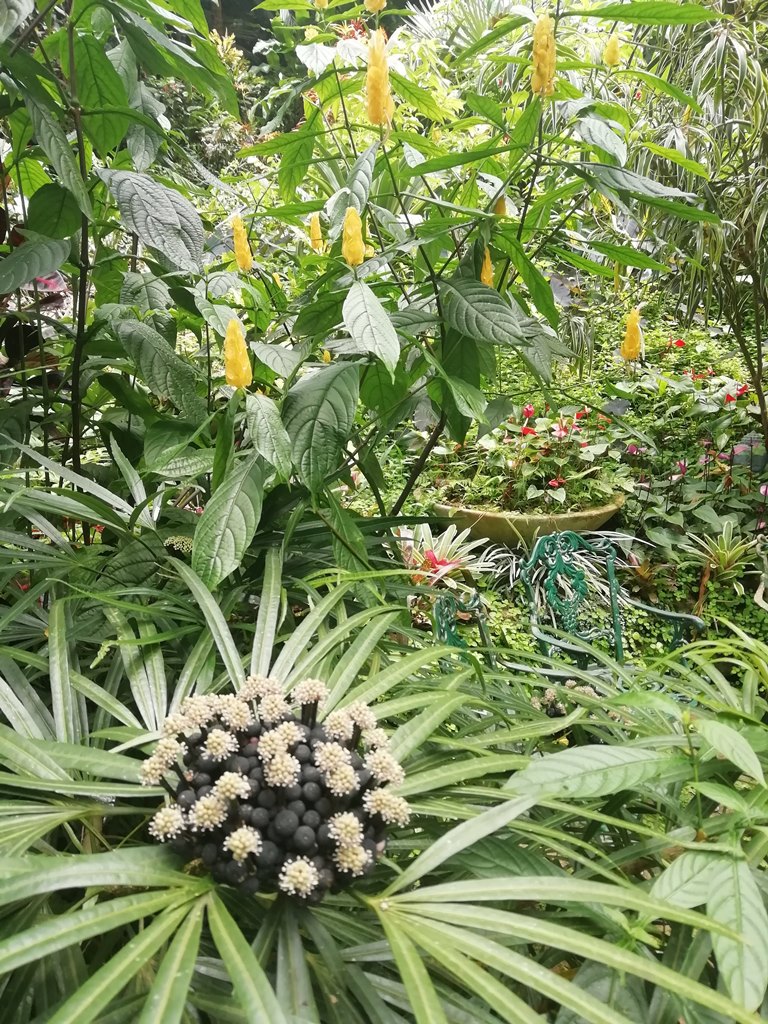
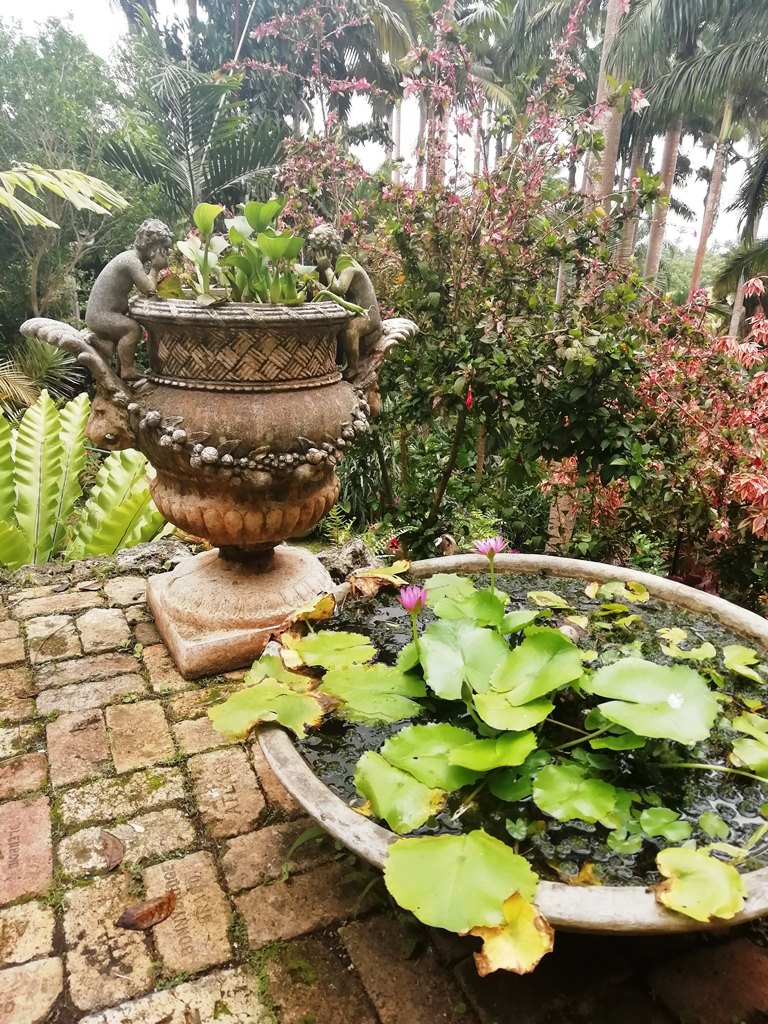
The morning was hot and the air very humid; on arrival we were suddenly exposed to a mass of colour and textures from the planting at the entrance and the sight of an old weigh bridge formerly used to weigh sugar cane on a plantation. This is the first of many artifacts that Anthony Hunte, BCH, (Barbados Centennial Honour bestowed in 2000 by the Barbadian Government for his contribution to horticulture) has collected from his travels and included in his garden. Once walking through the garden there is a series of winding paths and steps leading through the dense planting and into small intimate areas where you can sit and enjoy the plants and birds. The garden covers approximately 2.5 acres planted in a gulley roughly 150ft deep and 500ft wide; land purchased by Mr. Hunte from a former plantation. The garden feels enclosed not only by being in a gulley but also due to the majestic palms towering above the shrubs and flowers. I was unfamiliar with many of the plants although some were more usually seen at home as smaller household pot plants, such as Codiaeum gloriosa, Dendrobium, Anthuriums and Heliconia rostrate. At the end of the garden there is a board showing images of flora and fauna in the garden and together with a handout that you are given at the entrance it becomes possible to identify many of the plants that may be unfamiliar. The final feature of the garden is that classical music is played throughout which enhanced my experience of the garden.
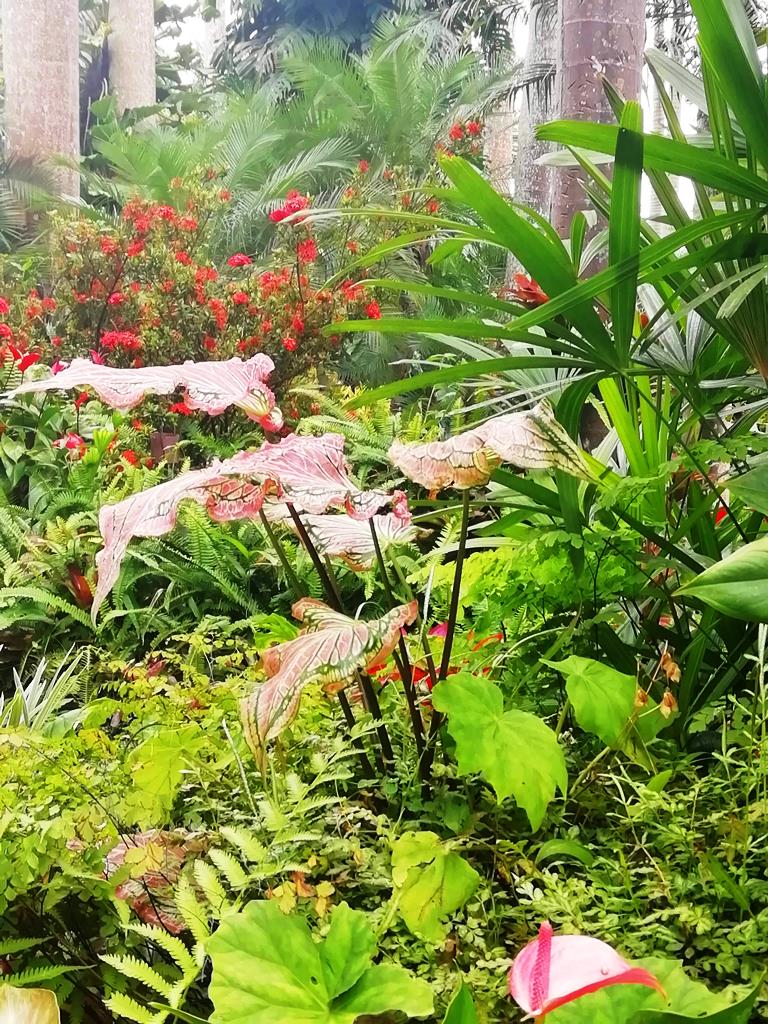
Climbing up to Mr. Hunte’s house at the end of our visit we were indeed welcomed and had an opportunity to chat about the garden. Anthony explained that it was his grandmother who had helped him develop his love of flowers, fruits and plants suited to the Barbadian climate. He said he still enjoyed working in the garden but at eighty years of age he is seeking to ensure a sound future for it.
How any individual will react to the garden is impossible to say, but I found it a delightful place which has left a lasting impression that I believe will stay with me.
Article by Jennie Starr
All photos © Jennie Starr