Day Two – 15 August 1928
A reprimand for Sam but another fine day
Buckhurst Manor – Great Dixter (with a diversion via Kent to visit Berr’s (Burrswood) nr. Groombridgeand Penshurst)
The day began with Sam having difficulty making himself understood when asking for directions to Buckhurst Manor (possibly because it took the name Buckhurst Park in the early nineteenth century) but Loyal sorted out the differences in English and eventually they found their way. Some unusual features caught Loyal’s attention:
‘A peculiar thing or two was a sundial in the dense shade of two Yews and second a built basin or pool with pieces of plate glass on edge for the bottom supposedly to reflect light through the water but apparently not very successful’.
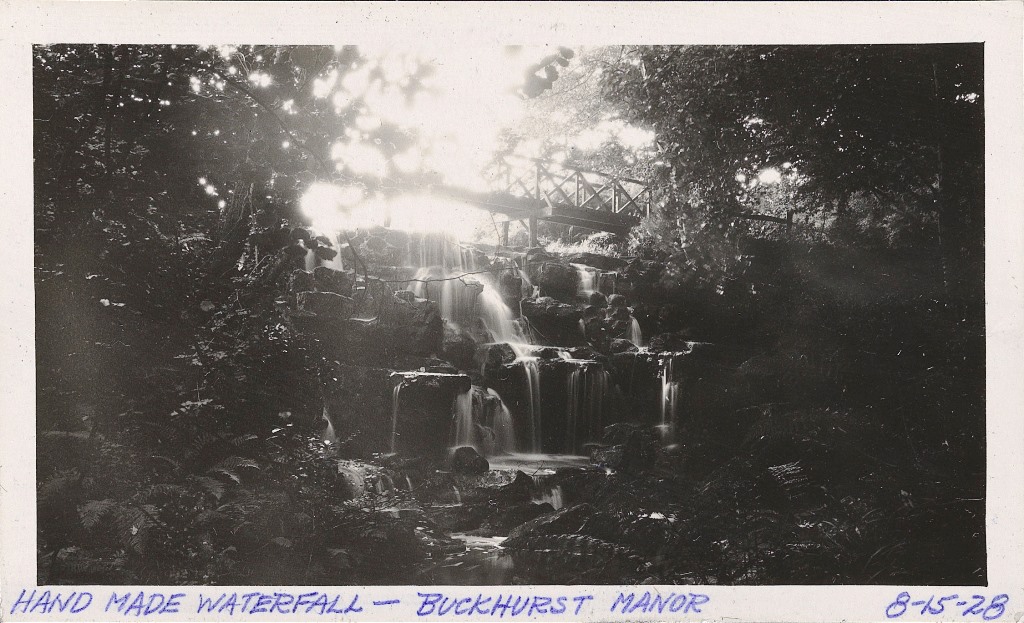
He was more impressed by the stonework by Lutyens and the ‘hand made waterfall’ by Pulham & Sons.
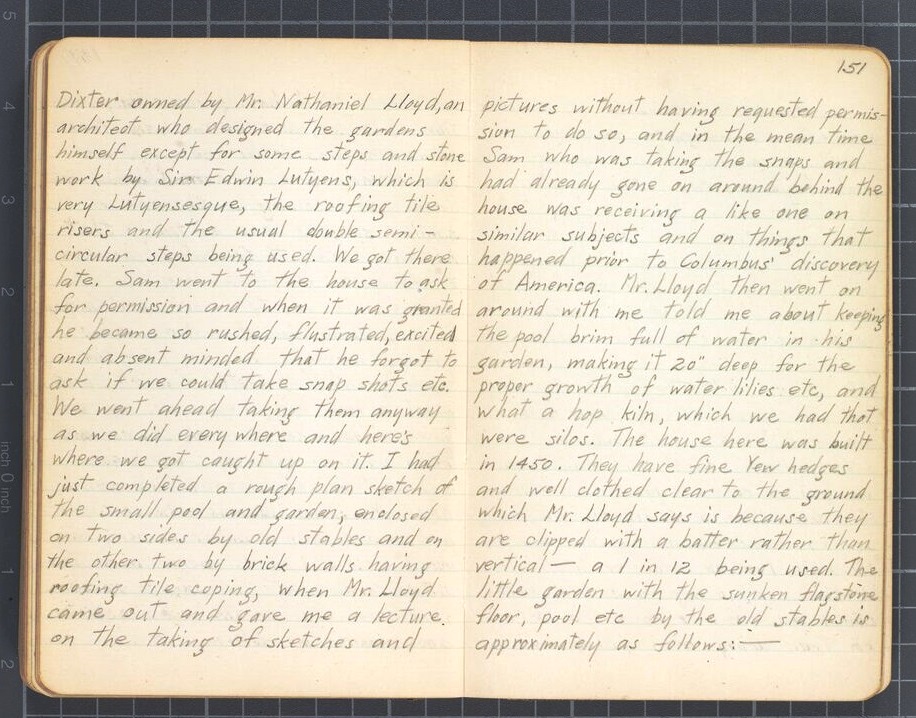
A diversion on their cycles over the border into Kent was then taken as the head gardener, Mr Philpot, suggested they go to Berr’s Wood, near Groombridge. This was in fact, Burrswood, perhaps another instance of the two Americans becoming confused by English pronunciation. Arriving late at Great Dixter, Sam went to the house to ask permission to see the garden but became ‘so excited and absent minded’ forgot to ask about taking photos. ‘We went ahead taking them anyway as we did everywhere and here’s where we got caught up on it’ wrote Loyal. But as he was completing a sketch of the small pool Nathaniel Lloyd appeared and lectured Loyal on taking sketches and pictures without permission.
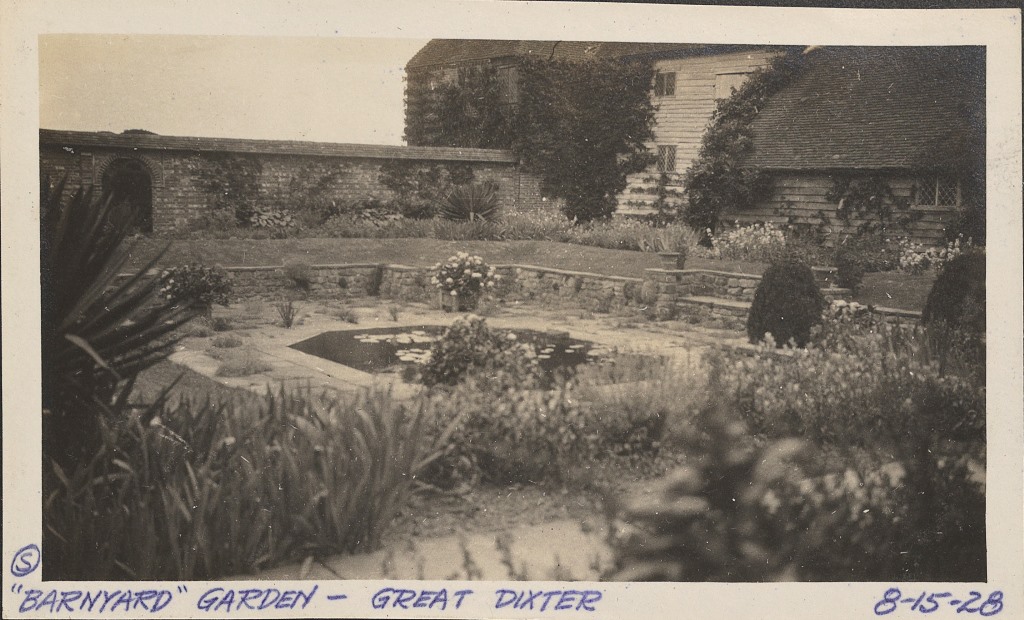
Here is Loyal’s sketch of the pool with dimensions carefully recorded. Lloyd gave the pair a tour of the garden and explained how to keep the pool brim full of water, exactly what a hop kiln was, and how to clip yews ‘with a batter rather than vertical’.
- Cutting a hedge ‘to’ a batter is when the hedge is slightly tapered on both sides so the base is wider than the top and lets in more light, but Loyal writes ‘a 1 in 12 being used’ – which suggests some kind of garden tool – any ideas?
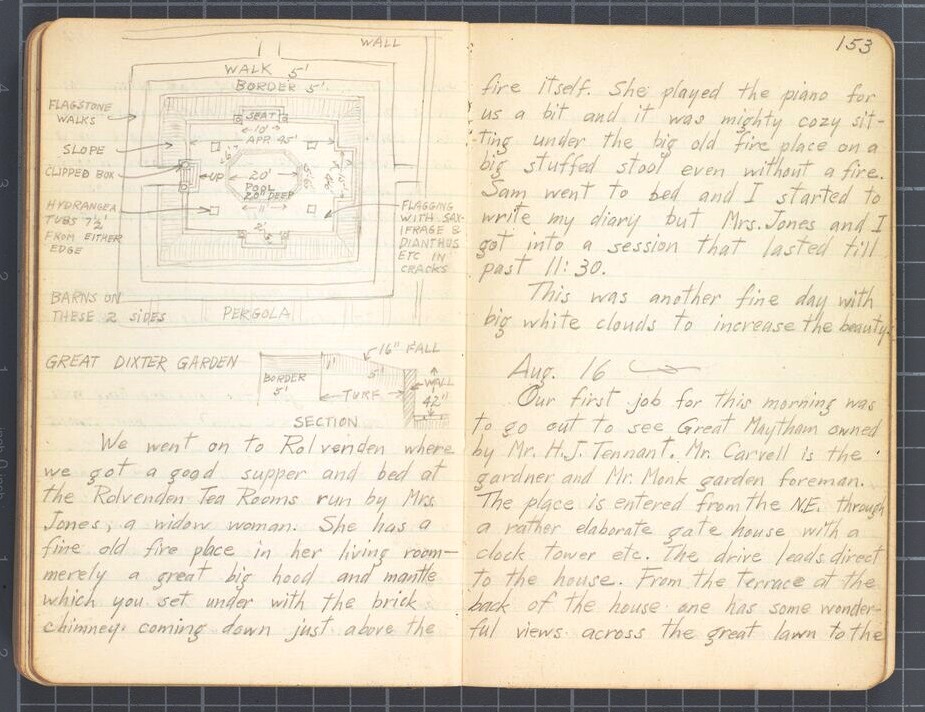
Coming to the end of their day it was across the border again and a five-mile cycle to Rolvenden in Kent for supper and bed at the Rolvenden Tea Rooms. The owner, Mrs Jones, played the piano which they found ‘mighty cozy’ and although Loyal started to write his diary he ‘got into a session’ that ‘lasted till past 11.30’, just managing to write at the end of his two-day tour of Sussex:
‘‘This was another fine day with big white clouds to increase the beauty’.
One month later and the friends were on board the RMS Berengaria sailing back to New York. On his return, Loyal started work with the Long Island Parks Department in New York, where he contributed to the landscaping of the new Jones Beach Park.
The gardens today
Buckhurst Park is now registered Grade II. Humphry Repton produced a Red Book for Buckhurst in 1806, and in 1903 Edwin Lutyens designed the terraced gardens that Loyal Johnson admired some twenty years later. Gertrude Jekyll produced the planting plans.
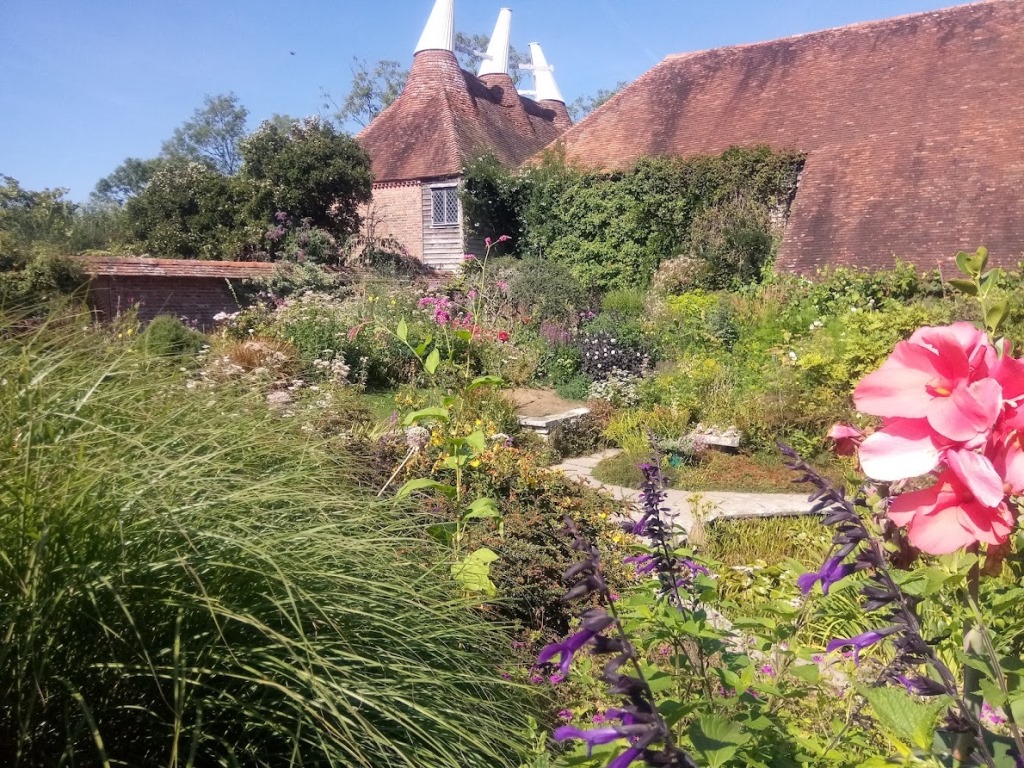
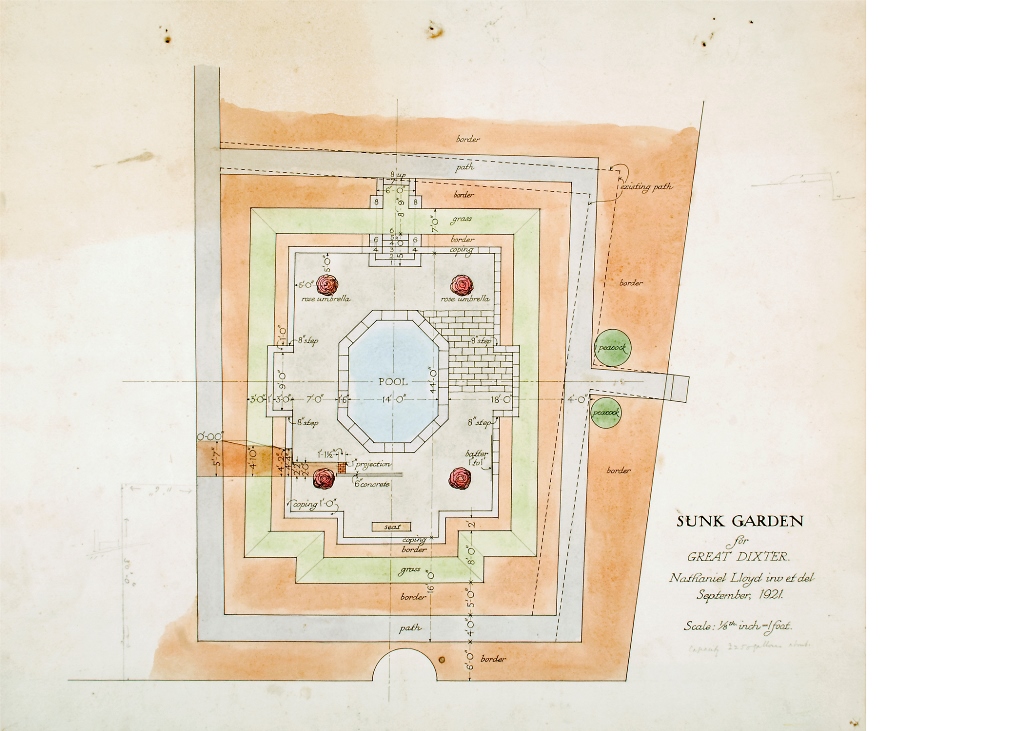
Great Dixter is renowned for its imaginative planting by Nathaniel’s son, Christopher Lloyd (1921-2006) who took over the gardens after the death of his mother in 1972, bringing his original and often rule-breaking ideas to the colours and forms of the planting. Fergus Garrett has been the head gardener for a number of years and continues to manage the garden in the spirit of Christopher Lloyd, as well as writing and lecturing. The Sunk Garden had been turned over to vegetables during World War 1 but Nathaniel Lloyd drew new plans for an octagonal pond in 1921. The head gardener in 1928 was Harry Rapley. Formerly assistant gardener at Warren Hill, Eastbourne, he was appointed by Nathaniel Lloyd in 1912 at the time the Great Dixter garden was being laid out. Usually, the Bicycle Boys were shown around gardens by the head gardener, but at Great Dixter Mr Lloyd took charge. The garden is Grade I registered.
The Sunk Garden remains, although the planting is more exuberant.