The post SGT Small Grants Scheme – recent projects first appeared on Sussex Gardens Trust.
]]>Our most recent grants have been made to parks and gardens in public or community ownership or management, particularly in urban areas, as we are acutely aware of the pressures on local authority budgets in parks and recreation or leisure departments.
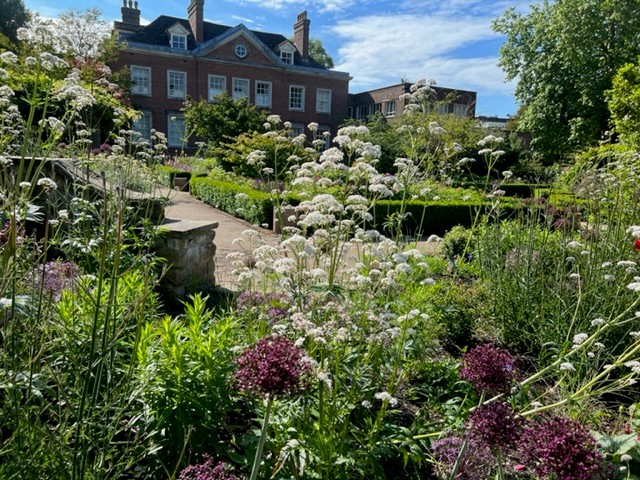
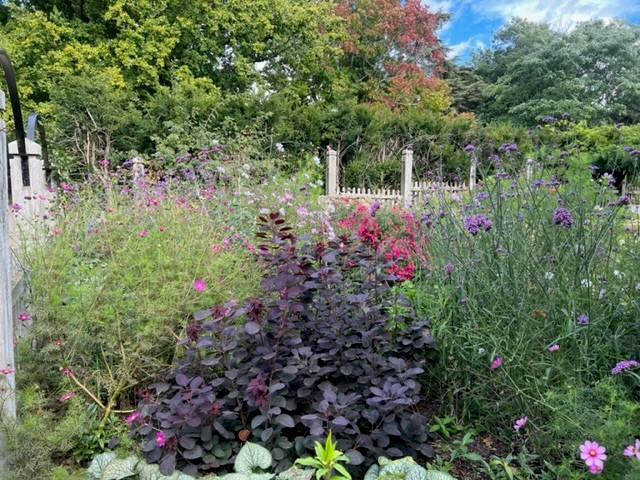
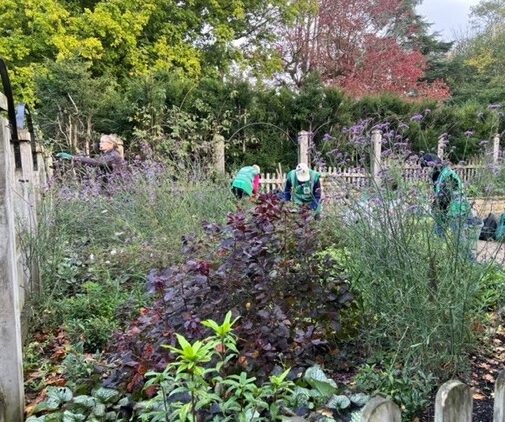
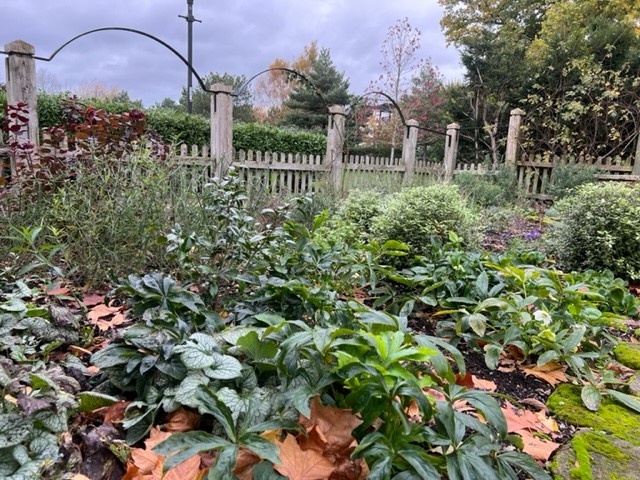
In April 2021 the Friends of Horsham Park sought funds to repair and restore their sensory garden in its thirtieth anniversary year. Visits and discussions with the Friends, Horsham DC officers and the head gardener were made and, as the Friends were able to demonstrate, they had in place both a five-year repair plan and match funding from various sources (including Horsham DC). SGT was pleased to offer them a grant of £1258, specifically to cover the replanting of a major bed for winter interest. The work was completed in November last year and since then the Friends of Horsham Park has kept SGT up-to-date with progress on the planting with articles and photographs published in Jottings.
This year an application has been made by the Friends of Meads Parks and Gardens for the Italian Garden in Eastbourne, for a grant to replant the climbing roses which historically covered the garden’s pavilion and pergolas. This addition will greatly enhance the buildings, restoring colour and ‘romantic’ character as shown in contemporary illustrations.
The Friends have persuaded Eastbourne Council to repair the structures and replanting the roses will complete the 1920s/30s appearance, as seen in the postcard view taken in the 1930s.
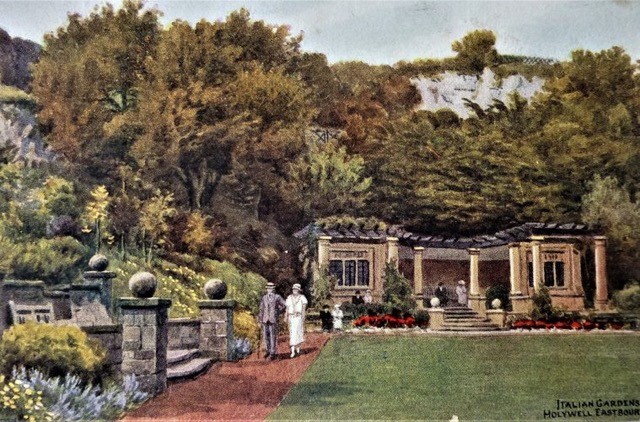
The site has important architectural and historic significance, as well as playing an crucial role in the community, offering a venue for cultural activity as well as a place of relaxation. The pavilion, the pergola-covered seating and the walling are all typical features of the many gardens created by municipal parks departments across the country for public enjoyment and recreation in the 1920s.
SGT was pleased to support the Friends’ application for a grant, which will help to restore and conserve this much-valued garden for future generations to enjoy, and the replanting of the roses and the restoration will feature on the SGT website next spring.
The criteria for applying for a small grant can be seen on the SGT website here, together with examples of recent case studies.
Photos of the sensory garden at Horsham Park © Sally Sanderson, Chair of the Friends of Horsham Park
The post SGT Small Grants Scheme – recent projects first appeared on Sussex Gardens Trust.
]]>The post Tales from the Research Group first appeared on Sussex Gardens Trust.
]]>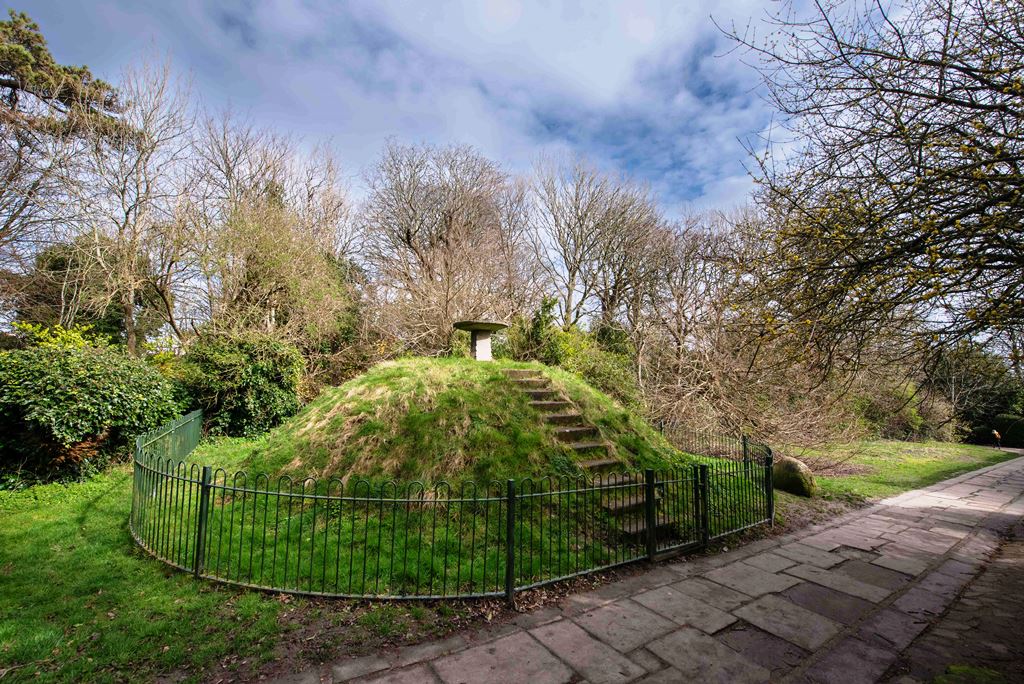
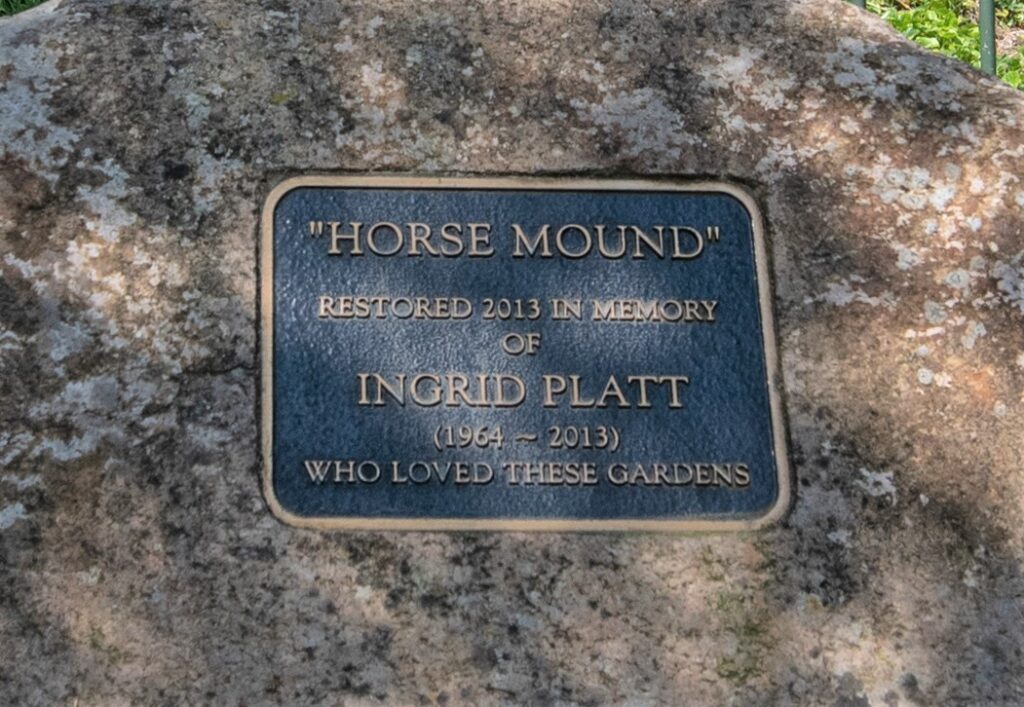
The plaque next to it says “Restored in 2013 in memory of ….”, a clue to the fact that it was there before 2013. It is a grass-covered mound with twelve steps leading to the top on which is currently a stone bird-bath, table top or toadstool? It is about twenty feet high. What was it originally?
Our first thoughts were maybe an ice house, popular in eighteenth century manor houses and estates – but there is no sign of an entrance way. How about a look-out position? A medieval mount? Interestingly there is a nearby rockwork feature in a depression which would have involved significant excavations – was the mound created with the excavated material? The plaque is inset into a large rock, not dis-similar to those found in the dell. But what was the mound for?
After a few internet searches we discovered that “Horse Mound” referred to the previous landowner’s favourite horse and was its final resting place – was it buried standing up? Why is it so tall? If it is a burial mound, there is a precedent here as there is a grave stone nearer the entrance to the garden which commemorates the family’s dog named Duke. When was it created?
Another search led to a rather surprising discovery and an interesting connection. A blog by Robjn Cantus in 2020 showed an image of Ravilious’s triptych called The Tennis Match – see below.
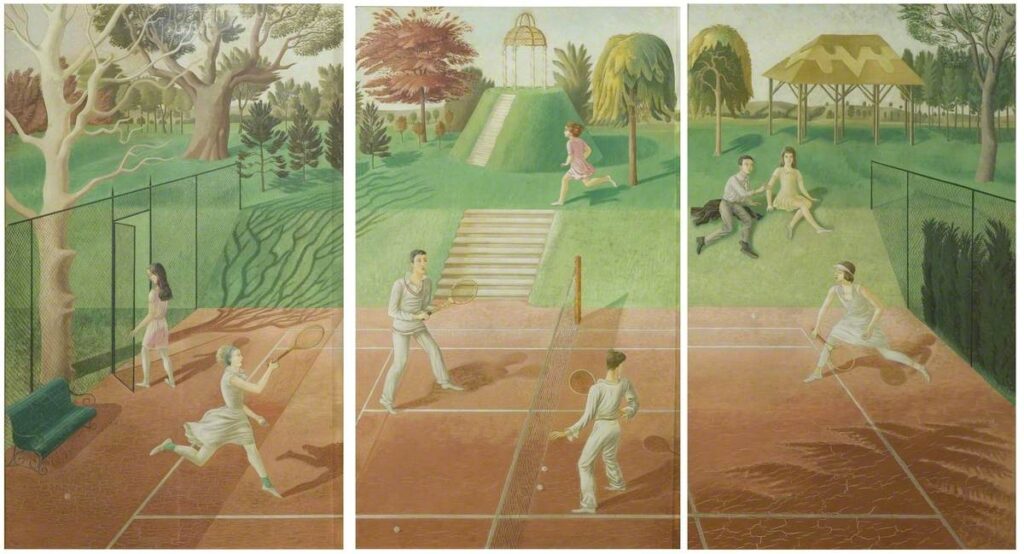
It started to look vaguely familiar. Then there was another image of a woodcut by Ravilious from 1925 – entitled Horse Mound.
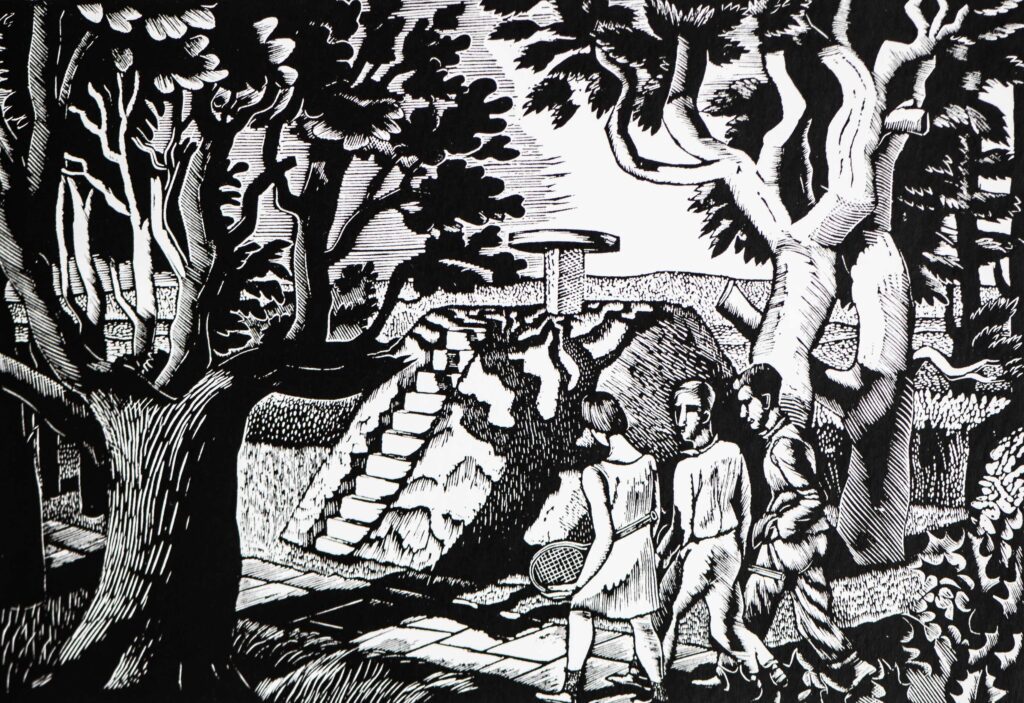
Bingo – this really is our mysterious Horse Mound in Manor Gardens!
Perhaps this shouldn’t have been such a surprise as the Manor House had housed the Towner Art Gallery from 1923 until 2005, when the house was sold and the new Towner Gallery built near the seafront. The key element of their collection was and is the work of Eric Ravilious who had studied and taught at Eastbourne School of Art.
So, mystery partly solved – we know that the ‘Horse Mound’ was there in 1925 when Ravilious sketched it. Now the challenge is to solve the rest of the puzzle. Having made our discoveries we left the site and on the way out saw a well-fed leucistic squirrel watching us from the grass – maybe another tail to follow!
Article by Pat Dauncey
The post Tales from the Research Group first appeared on Sussex Gardens Trust.
]]>